



What's Happening?
U.S. Representative Gwen Moore (WI-04) has been a key supporter of the Bipartisan Infrastructure Law (BIL), which has significantly contributed to Wisconsin's infrastructure development. The law, championed by Moore, along with Senator Tammy Baldwin and
U.S. Representative Mark Pocan, has provided substantial federal funding to the state. Recently, Governor Tony Evers and the Wisconsin Department of Transportation (WisDOT) announced that nearly $370 million will be allocated for 195 local, rural, and urban road and bridge improvement projects across Wisconsin. These funds are part of the next cycle of federal funding through the Surface Transportation Program (STP) and the Local Bridge Improvement Assistance Program. The BIL, which has been beneficial to Wisconsin over the past five years, is set to expire later this year, prompting Governor Evers to urge the state's Congressional delegation to pass a federal surface transportation reauthorization package.
Why It's Important?
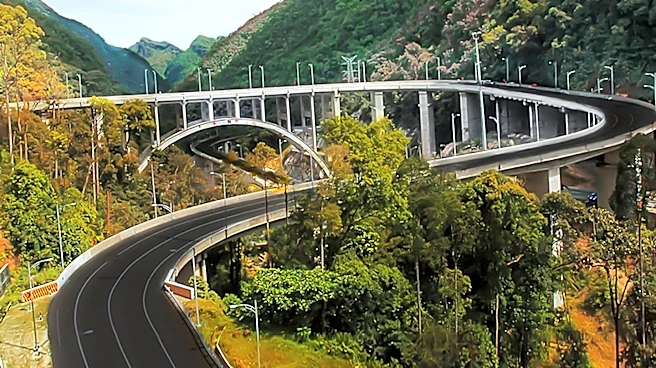
The Bipartisan Infrastructure Law's impact on Wisconsin underscores the critical role of federal funding in state-level infrastructure development. The nearly $370 million in new funding will address vital improvements to roads and bridges, enhancing safety and efficiency for residents and supporting the state's economy. This investment is crucial for maintaining and modernizing transportation systems, which are essential for commerce, daily commutes, and overall quality of life. The expiration of the current BIL highlights the ongoing need for sustained federal commitment to infrastructure, as states like Wisconsin rely on these funds to undertake large-scale projects that would otherwise be financially challenging. The bipartisan support for the initial law, despite opposition from some Republican members of Wisconsin's Congressional delegation, demonstrates the broad recognition of infrastructure's importance.
What's Next?
The immediate focus will be on the passage of a federal surface transportation reauthorization package. Governor Evers has already sent a letter to Wisconsin's Congressional delegation, including Representative Moore, urging swift action to ensure continued investment in the state's infrastructure. The upcoming legislative efforts will determine the future of federal funding for roads, bridges, fueling, and electric vehicle infrastructure. If a reauthorization package is not passed, Wisconsin and other states could face significant challenges in funding essential infrastructure projects, potentially leading to delays in improvements and a decline in the quality of transportation networks. The ongoing debate and voting in Congress will be critical in shaping the landscape of U.S. infrastructure development for the coming years.
Beyond the Headlines
The Bipartisan Infrastructure Law and its reauthorization efforts extend beyond immediate road and bridge repairs, touching upon broader themes of economic competitiveness and regional equity. Continued investment in infrastructure is vital for supporting a 21st-century economy, facilitating the movement of goods and services, and creating jobs. The emphasis on electric vehicle infrastructure also signals a commitment to future-proofing transportation systems and addressing climate concerns. The political dynamics surrounding the reauthorization package, particularly the bipartisan nature of the initial law versus potential future partisan divides, will reflect the broader challenges of legislative cooperation in addressing national priorities. The long-term implications include not only improved physical infrastructure but also enhanced connectivity and economic opportunities for both urban and rural communities.