






What's Happening?
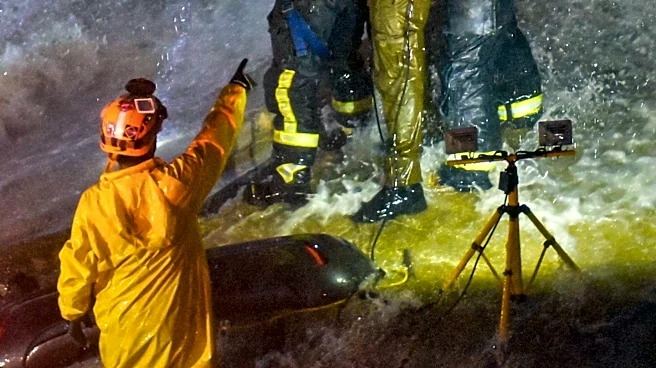
Over 50 volunteers, including University of Montana fisheries students and members of Trout Unlimited, participated in a fish rescue operation in Missoula's irrigation ditches. The effort was prompted by the closure of the Missoula irrigation ditch headgate,
which left fish stranded in shallow, non-flowing water. Volunteers used electrofishing equipment and nets to catch various fish species, including trout, whitefish, suckers, shiners, and sculpins, and transported them in buckets to the safety of the Clark Fork River. This annual event aims to save fish that would otherwise perish due to lack of water or become easy prey for predators. Rob Roberts, Trout Unlimited senior project manager, emphasized that every fish saved contributes to the Clark Fork River ecosystem.
Why It's Important?
This volunteer effort highlights a critical environmental issue concerning irrigation systems and their impact on aquatic ecosystems. The Missoula ditch network, built over a century ago, lacks fish screens, allowing fish to enter and become trapped when water flow ceases. While costly to install, fish screens are a proven method to prevent such incidents. The ongoing need for volunteer rescues underscores the financial and logistical challenges associated with upgrading aging infrastructure to meet modern environmental standards. The event also serves as a powerful example of community engagement in conservation, raising awareness about the broader threats to fish populations, such as low water levels, warming temperatures, and pollution. The participation of students suggests a growing interest in environmental stewardship among younger generations.
What's Next?
While the volunteer efforts are crucial, the long-term solution involves installing fish screens in irrigation ditches. Bill Pfeiffer, Montana Trout Unlimited outreach coordinator, expressed optimism that the growing momentum and awareness could lead to more permanent solutions, potentially reducing the need for future rescue operations. Montana currently relies on a voluntary approach for fish screens, unlike states like Washington, Oregon, and Idaho, which mandate them for salmon runs. Future discussions may focus on securing funding and political will to implement fish screening projects in Missoula and other areas. The Missoula Ditch, with its large headgate, presents a significant financial challenge for such an upgrade, estimated to cost around a couple million dollars, in addition to yearly maintenance.
Beyond the Headlines
The recurring need for fish rescues in Missoula's irrigation ditches points to a larger systemic issue of balancing agricultural and urban water use with environmental protection. The historical context of ditch construction, predating widespread ecological awareness, creates a legacy challenge. The debate over voluntary versus mandatory fish screen installation reflects differing approaches to environmental regulation and the role of government versus private entities in conservation efforts. This situation also touches upon the economic realities of irrigation companies, many of which are struggling with declining membership and insufficient funds for costly infrastructure upgrades. The community's dedication to these rescues, however, demonstrates a strong local commitment to preserving biodiversity and the health of the Clark Fork River ecosystem.