

What's Happening?
Iran has issued a warning that oil prices could surge to $200 per barrel if the ongoing conflict involving the U.S. and Israel continues to destabilize the Middle East's energy corridors. Ebrahim Zolfaqari, a spokesperson for Iran's Khatam al-Anbiya military
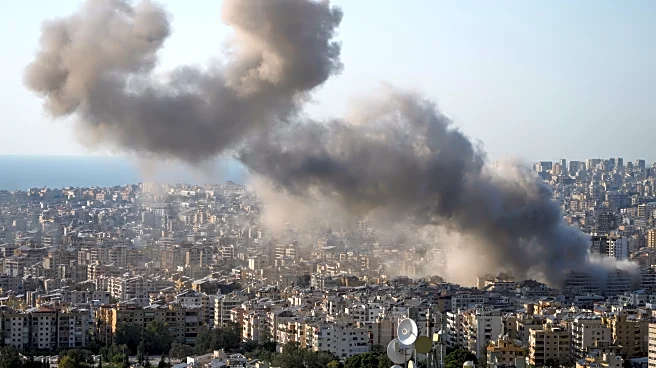
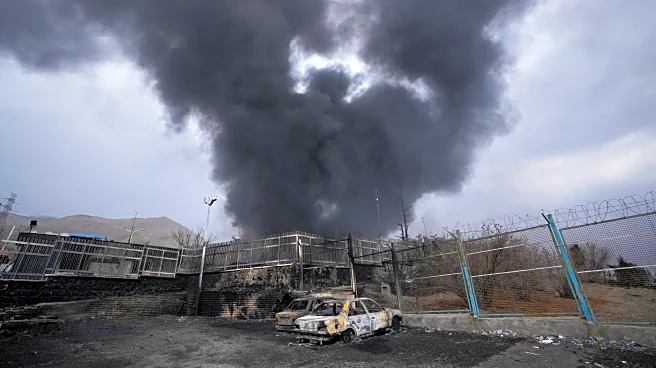
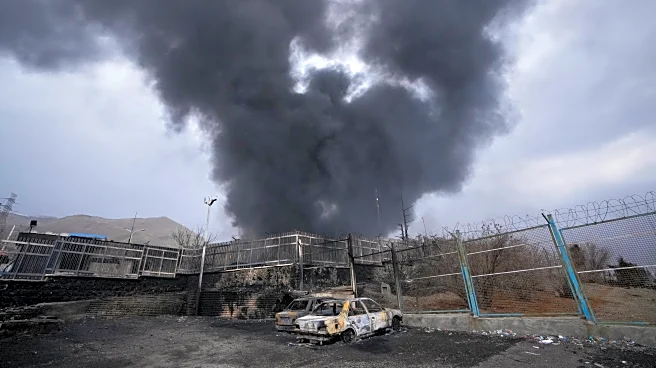
command, emphasized the potential for such a price spike due to the destabilization caused by the bombing campaign against Iran. The Strait of Hormuz, a critical chokepoint for global oil supply, is at the center of this escalating conflict. Recent attacks on shipping and infrastructure have already caused oil prices to fluctuate, with Brent crude reaching $120 per barrel before settling around $90. The situation remains volatile as maritime authorities report increasing attacks on commercial vessels in the region.
Why It's Important?
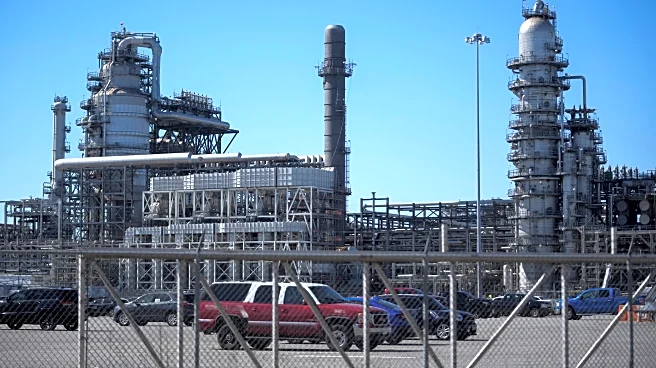
The potential for oil prices to reach $200 per barrel poses a significant threat to global energy markets, particularly as the Strait of Hormuz handles about 20% of the world's oil supply. Such a price increase could have widespread economic repercussions, affecting everything from transportation costs to the price of goods and services. The conflict also highlights the vulnerability of global supply chains to geopolitical tensions, which could lead to increased energy costs and economic instability worldwide. Stakeholders in the energy sector, including insurers and ship operators, are already reassessing the risks associated with transiting the Strait of Hormuz, which could further disrupt supply chains.
What's Next?
As the conflict continues, stakeholders will likely monitor the situation closely, with potential diplomatic efforts to de-escalate tensions. The U.S. and other global powers may seek to engage in negotiations to prevent further disruption to the global oil supply. Additionally, energy companies and governments may explore alternative routes and sources to mitigate the impact of any prolonged disruption in the Strait of Hormuz. The situation remains fluid, and any developments could have significant implications for global energy markets and geopolitical stability.