






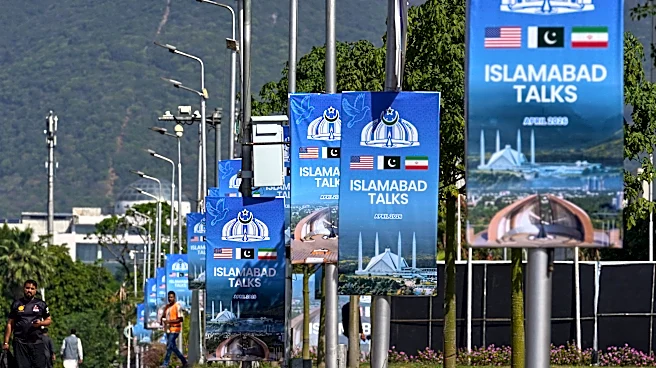

What's Happening?
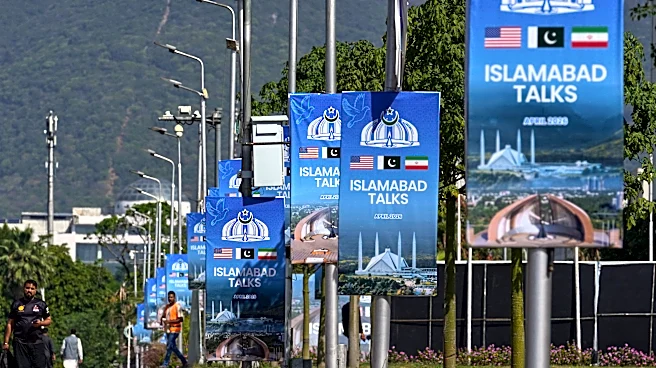
The United States has informed Israel that the ceasefire deadline with Iran has been extended to Sunday, as negotiations continue. President Trump has not publicly announced a new deadline, but recent reports indicate multiple timelines have been considered.
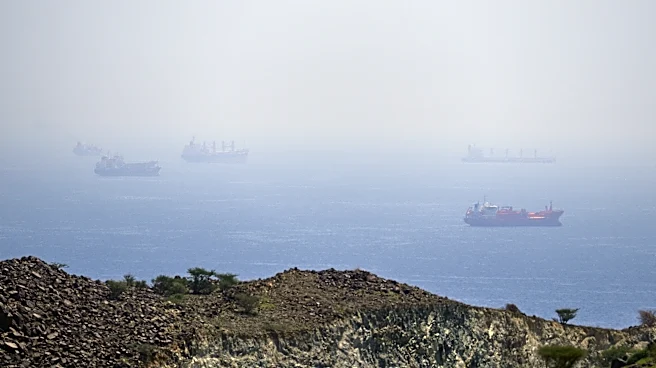
The extension comes amid ongoing tensions, with the US maintaining a naval blockade on Iran and Tehran responding by detaining vessels in the Strait of Hormuz. Israeli officials have expressed skepticism about reaching an agreement by the new deadline, citing firm positions held by both sides. The situation remains fluid, with the US aircraft carrier advancing toward the Persian Gulf.
Why It's Important?
The extension of the ceasefire deadline is a critical development in the ongoing US-Iran relations, impacting regional stability and international diplomatic efforts. The decision to extend the deadline suggests a willingness to continue negotiations, potentially averting immediate military escalation. However, the continued naval blockade and Iran's actions in the Strait of Hormuz highlight the fragile nature of the situation. The outcome of these negotiations could have significant implications for US foreign policy, regional security, and global oil markets, given the strategic importance of the Persian Gulf.
What's Next?
As the new deadline approaches, diplomatic efforts are likely to intensify, with both sides potentially seeking concessions to reach an agreement. The US may continue to leverage its military presence in the region as a negotiating tool, while Iran may seek to strengthen its position through strategic actions. The international community will be closely monitoring the situation, with potential implications for global diplomatic relations and economic stability. The outcome of these negotiations could set the tone for future US-Iran interactions and influence broader Middle Eastern geopolitics.