




What's Happening?
The United Nations Environment Programme (UNEP) has released a report titled 'No Transition Without Justice: Strengthening Environmental Rule of Law for People and Planet,' which highlights the potential for increased inequality and new injustices as the world
transitions away from fossil fuels. The report emphasizes the concept of a 'just transition,' which aims to ensure that environmental sustainability efforts do not leave vulnerable communities and workers behind. UNEP argues that current environmental policies often overlook social and economic impacts, thereby worsening inequality. The report calls for policies that include workforce retraining, social protections, and community engagement to ensure that the economic costs of climate action do not disproportionately affect low-income families and marginalized groups.
Why It's Important?
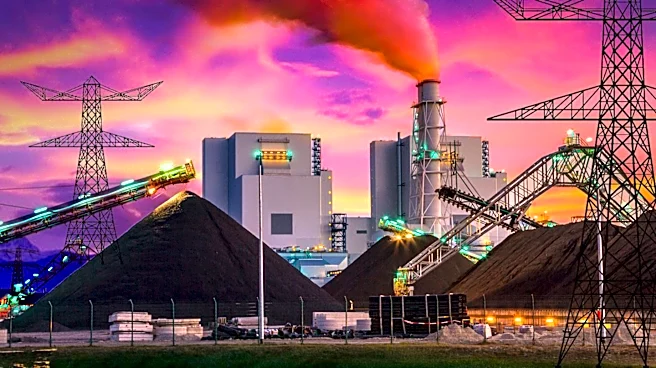
The UNEP report underscores the critical need for integrating social justice into climate action plans. As countries move towards reducing greenhouse gas emissions, there is a risk that communities dependent on carbon-intensive industries, such as coal mining, could face economic devastation. The report highlights that without proper safeguards, transitions to cleaner energy could repeat patterns of forced displacement and community fragmentation. By advocating for a balanced approach that includes human rights protections and economic safeguards, the report aims to prevent the exacerbation of existing inequalities. This approach is crucial for gaining long-term public support for sustainable environmental policies and ensuring that the benefits of climate action are equitably distributed.
What's Next?
The report suggests that governments need to actively address existing inequalities and involve vulnerable communities in decision-making processes to ensure a fair transition. By 2024, several countries had already incorporated just transition language into their national climate commitments under the Paris Agreement. Moving forward, UNEP emphasizes the importance of direct participation through Indigenous-led initiatives and meaningful community engagement. These steps are essential to create a transition that is both environmentally sustainable and socially equitable, ultimately building a more inclusive and just global society.
Beyond the Headlines
The UNEP report brings attention to the broader implications of climate policies that neglect social justice. It highlights the ethical responsibility of governments to protect vulnerable populations from the adverse effects of environmental transitions. The report also points to the potential for climate action to inadvertently create greater social problems if not carefully managed. By advocating for a just transition, UNEP is calling for a paradigm shift in how environmental policies are crafted, ensuring that they are inclusive and equitable, thereby fostering a more sustainable and just future for all.