
What's Happening?
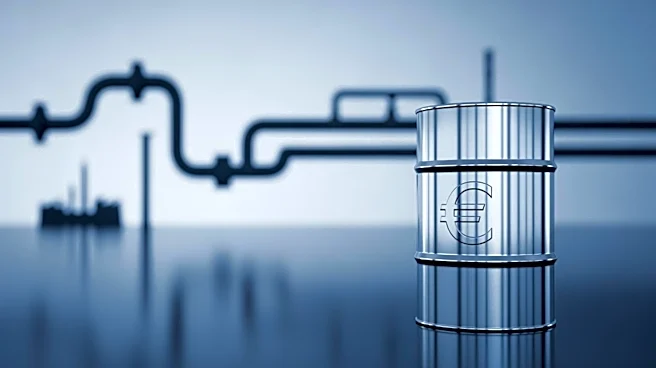
European ministers from Spain, Germany, Italy, Portugal, and Austria have called for the implementation of a windfall tax on energy companies. This proposal comes in response to the surging oil and gas
prices driven by the ongoing conflict in the Middle East, which has significantly impacted the European economy and its citizens. The ministers argue that the financial burden resulting from these price increases should be distributed more equitably. Europe, heavily reliant on imported oil and gas, is particularly vulnerable to such external shocks. The recent inflation spike, following Russia's invasion of Ukraine, has exacerbated the situation, with the eurozone's annual inflation rate rising to 2.5% in March from 1.9% in February. The blockage of tanker traffic through the Strait of Hormuz by Iran, a critical passage for global oil and gas, further threatens to strain fuel markets.
Why It's Important?
The call for a windfall tax highlights the broader economic challenges faced by Europe due to its dependency on imported energy resources. The proposed tax aims to ensure that energy companies, which have profited from the price surges, contribute to alleviating the financial strain on the general public. This move could set a precedent for how governments address market distortions caused by geopolitical conflicts. The situation underscores the need for Europe to diversify its energy sources and reduce reliance on external suppliers. The outcome of this proposal could influence energy policies and economic strategies across the continent, potentially affecting global energy markets and international relations.
What's Next?
The European Commission is expected to consider the proposal for a windfall tax as it seeks to address the market distortions and fiscal constraints highlighted by the ministers. If implemented, this tax could lead to significant policy shifts within the EU, impacting energy companies and consumers alike. The ongoing conflict in the Middle East and the blockade of the Strait of Hormuz will likely continue to influence fuel prices and economic stability in the region. Stakeholders, including political leaders and energy companies, will need to navigate these challenges while balancing economic growth and public welfare.