





What's Happening?
Democratic candidate for Wisconsin governor, David Crowley, has responded to a campaign advertisement from Congressman Tom Tiffany's campaign that labels him as 'Data Center David.' During an interview with WSAW, Crowley stated that communities should
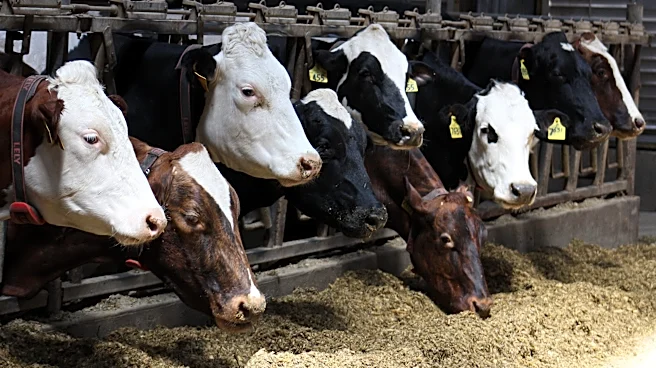
have a say in whether data centers are built within their areas. He emphasized the need for guardrails if communities choose to allow data centers, asserting that the state must aggressively protect its water, land, and people from large tech companies that he claims are 'steamrolling' communities. Crowley criticized Tiffany for voting for a bill that allocated $70 billion to tech companies for data center construction and for being a deciding vote to ban states from regulating artificial intelligence. Additionally, Crowley addressed the impact of a tariff trade war between the president and Canada on dairy farmers. He advocated for farmers to have a voice in policy decisions and for the state to provide relief, suggesting that repealing the minimum markup law on gas could help lower costs for farmers and manufacturers who use heavy equipment and diesel fuel. Crowley also noted that Tiffany had adopted the proposal to repeal the minimum markup law from his own platform.
Why It's Important?
This development is important for Wisconsin's political landscape and its economic sectors, particularly agriculture and technology. Crowley's stance on data centers highlights a growing tension between technological expansion and local community control, reflecting broader national debates about the environmental and social impacts of large-scale tech infrastructure. His criticism of Congressman Tiffany's voting record on tech-related legislation underscores a partisan divide on how to regulate the industry and protect local interests. For dairy farmers, the discussion around tariffs and the minimum markup law on gas directly impacts their operational costs and profitability. Wisconsin is a major dairy-producing state, and any policy that can alleviate financial burdens on farmers has significant economic implications for the state's agricultural sector. The debate over the minimum markup law also touches upon broader economic principles of market regulation and consumer pricing, affecting not just farmers but also other industries reliant on fuel. The political discourse surrounding these issues could influence voter sentiment and the outcome of the gubernatorial election, shaping future state policies on technology, agriculture, and economic regulation.
What's Next?
The ongoing campaign for Wisconsin governor will likely see continued debate on these issues, with both David Crowley and Congressman Tom Tiffany further elaborating on their positions. Voters in Wisconsin will be evaluating how each candidate plans to balance technological development with community interests and how they intend to support the state's vital agricultural sector amidst national and international economic pressures. Crowley's proposal to repeal the minimum markup law on gas could gain traction among farmers and other businesses, potentially becoming a key policy point in his campaign. The discussion around data center regulation may also prompt more detailed proposals from both candidates on how to manage the growth of the tech industry within the state. As the election approaches, public forums and debates will provide further opportunities for candidates to present their solutions and for the electorate to weigh the potential impacts of their proposed policies on Wisconsin's economy and communities.
Beyond the Headlines
The debate over data centers and their regulation in Wisconsin reflects a broader national challenge concerning the rapid expansion of the tech industry and its footprint on local communities. The 'steamrolling' accusation by Crowley points to concerns about the power dynamics between large corporations and local governance, raising questions about environmental sustainability, resource allocation (like water and land), and the long-term economic benefits versus costs for host communities. The discussion also touches upon the ethical implications of AI regulation, specifically the balance between fostering innovation and ensuring public oversight and protection. For the agricultural sector, the tariff trade war and the minimum markup law highlight the vulnerability of local industries to global economic policies and the need for state-level interventions to mitigate adverse effects. This situation underscores the complex interplay between federal trade policies, state regulations, and the livelihoods of essential industries, prompting a deeper examination of how political leaders can best advocate for their constituents in an interconnected economy.