




What's Happening?
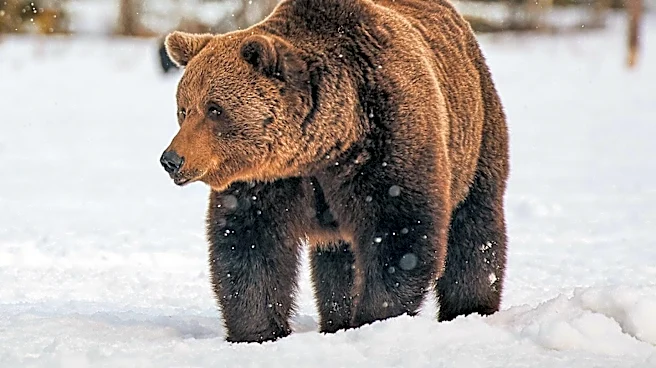
Dr. Anne Pasek, a Colorado beekeeper, reported that her eight beehives in Littleton were attacked by a bear last month. She believes the perpetrator was a young bear, as it managed to destroy frames containing brood but did not effectively access the honey
or larvae, suggesting inexperience. This incident adds to an already challenging period for beekeepers in Colorado, who have been contending with drought conditions and mite resistance, leading to significant bee losses nationwide. Pasek had previously protected her hives with an electric tape fence, which the bear bypassed. She reported the incident to Colorado Parks and Wildlife (CPW), which responded within 24 hours by providing materials for a more robust electric fence. CPW does not specifically track apiary damage by bears but notes such reports are not uncommon, and an attack on hives does not automatically lead to euthanasia for the bear.
Why It's Important?
This incident highlights the growing conflict between human activities, such as beekeeping, and wildlife in areas where their habitats overlap, particularly in Colorado. The increasing frequency of bear encounters with human property, including beehives, reflects broader ecological shifts, potentially driven by factors like drought and food scarcity that push bears into more populated areas. For beekeepers, these attacks represent significant financial losses and operational challenges, especially when combined with existing issues like mite resistance and adverse weather conditions. The response from Colorado Parks and Wildlife, providing fencing materials, underscores the agency's role in mitigating these conflicts and supporting affected residents. This situation also raises questions about wildlife management strategies and the balance between protecting wildlife and safeguarding agricultural interests, emphasizing the need for effective deterrents and community education on coexistence.
What's Next?
Following the bear attack on her hives, Dr. Anne Pasek has reinforced her apiary with a new electric fence provided by Colorado Parks and Wildlife (CPW), which has successfully deterred further incidents for a month. CPW will continue to monitor bear activity in the area and respond to reports of property damage. While CPW does not track apiary damage specifically, they assess each bear incident comprehensively, considering the bear's overall behavior and patterns before making any management decisions, such as relocation or euthanasia. This incident may prompt increased awareness among beekeepers and residents in Colorado about the importance of bear-proofing properties and utilizing available resources from wildlife agencies. The broader challenge of managing human-wildlife interactions, especially as bear populations and environmental pressures fluctuate, will likely continue to be a focus for state wildlife authorities and local communities.
Beyond the Headlines
The bear attack on Dr. Anne Pasek's beehives in Colorado extends beyond a simple property damage report, touching upon the intricate web of ecological and economic challenges faced by modern society. This event underscores the delicate balance between human expansion and wildlife preservation, particularly as climate change and habitat encroachment force animals into closer contact with human settlements. For beekeepers, the loss of hives to wildlife adds another layer of vulnerability to an industry already grappling with colony collapse disorder, pesticide use, and environmental stressors, highlighting the fragility of agricultural ecosystems. Ethically, it raises questions about human responsibility in managing shared landscapes and the extent to which society should adapt to or mitigate wildlife interactions. The incident also serves as a microcosm of broader environmental issues, where the actions of one species (humans) can inadvertently impact others, leading to unforeseen conflicts and necessitating adaptive solutions for coexistence.