









What's Happening?
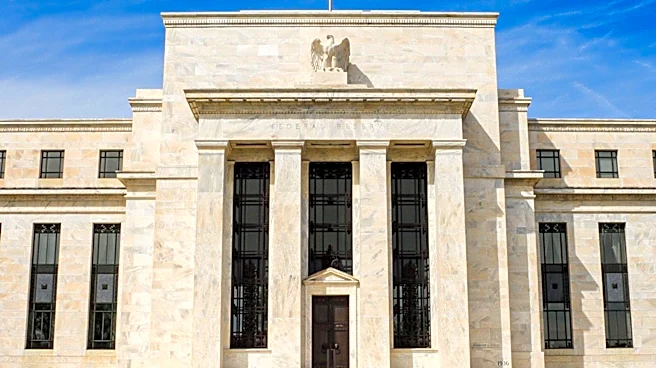
The Federal Reserve has ceased its regular remittances to the U.S. Treasury Department since September 2022. Historically, these payments, which averaged over $80 billion annually between 2011 and 2021, represented the Fed's net profits after covering
its operating costs and dividends. The halt is attributed to a significant increase in interest rates, which has caused the Fed's interest expenses on bank reserves to exceed the income generated from its securities holdings. The Fed records these shortfalls as a 'deferred asset,' which currently stands at over $230 billion. This deferred asset must be paid down from future earnings before remittances to the Treasury can resume. While the Fed returned to profitable operations in 2026, the collective deferred asset is still substantial, and the Congressional Budget Office (CBO) anticipates that material remittances will not resume until 2031.
Why It's Important?
The cessation of Federal Reserve remittances has a material impact on the federal budget and the national debt. Remittances are counted as federal revenue, meaning that every dollar the Fed does not send to the Treasury must be borrowed, thereby increasing the federal deficit. This situation exacerbates the negative effects of high interest rates on the deficit, as higher rates not only increase borrowing costs for the government but also reduce a significant source of revenue. While the deferred asset does not directly add to the federal debt or impair the Fed's ability to conduct monetary policy, it represents a substantial loss of income for the Treasury. Lawmakers are advised not to consider remittances a dependable source of federal revenue, highlighting a shift in fiscal planning and potential challenges for managing the national debt in the coming years.
What's Next?
The Congressional Budget Office projects that the pause in Federal Reserve remittances will continue until 2031. This timeline is contingent on how long short-term interest rates remain elevated and the pace at which the Fed rebalances its portfolio towards shorter-maturity securities. The Fed must first pay down its $230 billion 'deferred asset' from future earnings before it can resume sending profits to the Treasury. While some individual Federal Reserve banks have started issuing minor remittances, the collective deferred asset remains a significant hurdle. The prolonged absence of these remittances will necessitate adjustments in federal budgeting and revenue projections, potentially leading to increased borrowing or the need for alternative revenue streams to offset the shortfall.
Beyond the Headlines
The current situation underscores the intricate relationship between monetary policy and fiscal health. The Fed's actions to combat inflation by raising interest rates, while necessary for economic stability, have inadvertently created a fiscal challenge for the Treasury. This highlights a broader implication: the tools used to manage one aspect of the economy can have significant, sometimes unforeseen, consequences for others. The 'deferred asset' mechanism, while an accounting entry that doesn't directly burden taxpayers, represents a substantial opportunity cost for the federal government. It also prompts a re-evaluation of how policymakers view and plan for revenue streams that are subject to the dynamic nature of monetary policy, emphasizing the need for robust and diversified federal income sources.