





What's Happening?
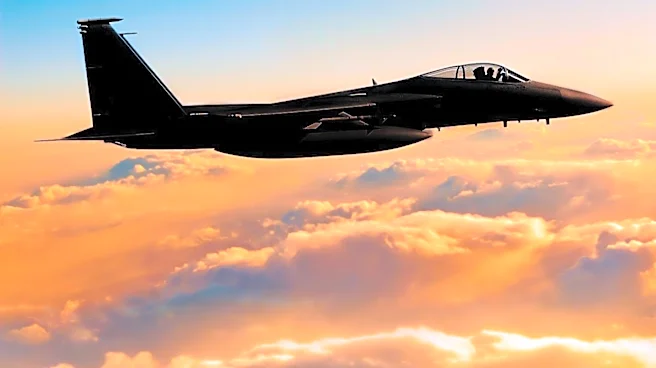
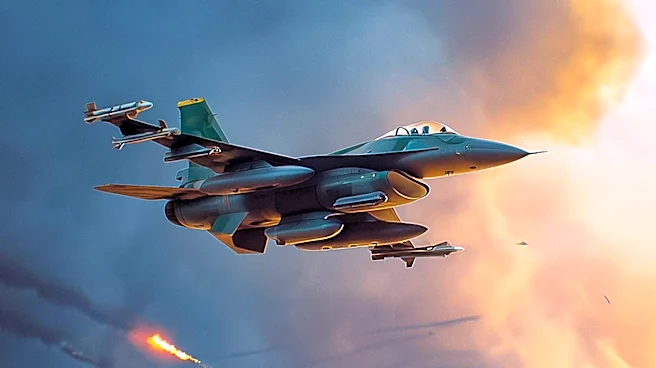
NATO is currently conducting large-scale military aviation exercises over Poland, with significant activity observed across the country, particularly in the northeastern, central, and eastern regions. These planned exercises involve various NATO aircraft,
including U.S. military assets. Among the aircraft participating are F-35 fighter jets, E-3 Sentry AWACS surveillance planes, and aerial refueling tankers. The Operational Command has confirmed that this increased aerial activity is part of a pre-planned NATO exercise and is not related to any recent actions by Russian air forces. The exercises aim to enhance interoperability and readiness among NATO member states.
Why It's Important?
These NATO exercises over Poland are important as they demonstrate the alliance's commitment to collective defense and readiness, especially in a region bordering geopolitical flashpoints. The involvement of advanced U.S. aircraft like the F-35 and critical support assets such as AWACS and refueling planes underscores the sophisticated nature of modern military operations and the importance of integrated air power. Such drills serve to strengthen the defensive capabilities of NATO's eastern flank and send a clear message of deterrence. For the U.S., participation in these exercises reinforces its role as a key ally and contributor to European security, ensuring that its forces can effectively operate alongside those of other NATO members. The exercises also provide valuable training opportunities for pilots and ground crews, improving coordination and tactical proficiency in a realistic operational environment.
What's Next?
The NATO exercises over Poland are expected to continue as planned, with participating forces focusing on achieving their training objectives. Following the conclusion of these drills, NATO will likely conduct assessments to evaluate the effectiveness of the exercises and identify areas for further improvement in joint operations and readiness. The insights gained from these exercises will inform future training programs and strategic deployments. There may also be public statements from NATO officials or participating nations detailing the outcomes and reaffirming the alliance's commitment to regional security. The continuous cycle of such exercises is a standard practice for NATO to maintain a high level of preparedness and responsiveness to potential threats.
Beyond the Headlines
Beyond the immediate military objectives, these exercises carry significant geopolitical weight. They serve as a visible manifestation of NATO's resolve and unity in the face of evolving security challenges in Eastern Europe. The presence of U.S. and other NATO aircraft in Polish airspace can be interpreted as a strategic signal to both allies and potential adversaries, emphasizing the alliance's capacity for rapid deployment and sustained operations. Furthermore, these drills contribute to the broader strategic dialogue about regional stability and the future of European security architecture. The integration of diverse air assets from multiple nations highlights the complex logistical and command structures required for modern warfare, showcasing the depth of cooperation within NATO. The exercises also indirectly support the defense industry by demonstrating the operational needs for advanced military hardware and technology.