


What's Happening?
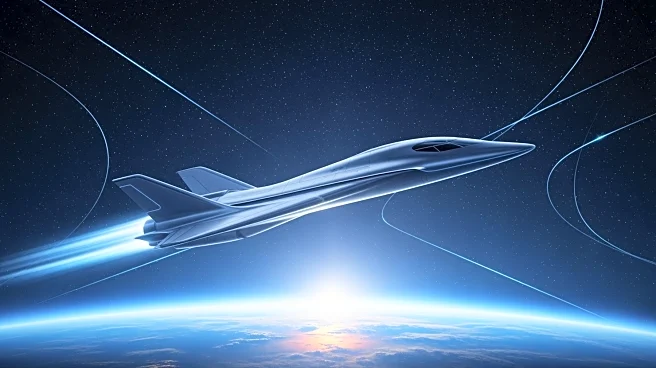
China has launched a reusable experimental spacecraft from the Jiuquan Satellite Launch Center, marking the fourth mission in a program aimed at advancing peaceful space technology. The spacecraft, launched atop a Long March-2F carrier rocket, is part
of China's efforts to master reusable spaceplane-style vehicles. The mission is framed as a test of technologies for the peaceful use of space, although specific details about the technologies being tested and the duration of the mission have not been disclosed. The program has seen a gradual escalation in scope since its inception in 2020, with previous missions demonstrating long-duration on-orbit capabilities.
Why It's Important?
China's continued investment in reusable spacecraft technology highlights its ambitions in space exploration and the strategic importance of space capabilities. The program's focus on reusable vehicles aligns with global trends towards increasing flight frequency and reducing costs, while also raising questions about dual-use capabilities and transparency. The mission's potential as a counterpart to the U.S. Space Force's X-37B underscores the competitive nature of space exploration and the geopolitical implications of advancements in space technology. China's emphasis on peaceful use of space reflects its desire to position itself as a leader in space exploration while addressing international concerns about militarization.
What's Next?
As the mission progresses, further information about the spacecraft's capabilities and the technologies being tested may be released. Analysts will continue to monitor state updates and orbital telemetry to assess the program's trajectory and its implications for long-duration, responsive space operations. The mission's success could bolster China's position in the global space race and influence international discussions on space policy and cooperation. The program's development will be closely watched by other space-faring nations, as it may impact the balance of power in space exploration and technology.