





What's Happening?
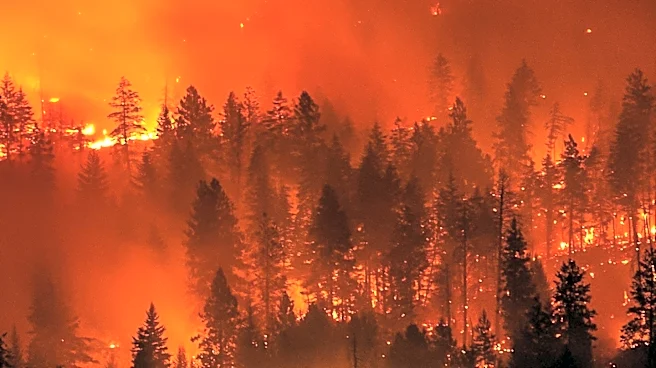
A new study led by U.S. Geological Survey (USGS) scientists has found that the 2020 and 2021 wildfires in northern California significantly increased the amount of water flowing through the upper Feather River watershed. This watershed is crucial as it
feeds Lake Oroville, a primary water source for over 27 million people. The study indicates that with fewer plants consuming water after the fires, more water remained in the soil or flowed into streams. In water year 2023, the model showed approximately 1 million more acre-feet of water available for streamflow and groundwater due to the fires, which is nearly a third of Lake Oroville's capacity. The increase continued into the following year with about 690,000 acre-feet. While acknowledging the destructive nature of wildfires, the study suggests that understanding this change can help water managers adapt.
Why It's Important?
This research offers a nuanced perspective on the environmental impacts of wildfires, highlighting an unexpected benefit for water supply in a drought-prone region. For California, where water scarcity is a persistent concern, an increase in water availability in key reservoirs like Lake Oroville could be a significant factor in water management strategies. The study's findings suggest that forest thinning and controlled burns, which reduce the density of vegetation, could potentially contribute to a more reliable water supply, especially as climate change leads to declining rain and snow. This insight is crucial for policymakers and water managers, as it provides a scientific basis for integrating forest management practices into broader water resource planning, potentially mitigating some of the negative effects of climate change on water availability.
What's Next?
The study's lead author, Diana Zamora-Reyes, emphasizes that while wildfires cause harm, understanding their impact on water flow can help water managers turn a negative into a positive. This suggests that future policy and management decisions in California could increasingly consider the hydrological effects of forest fires. The findings may encourage greater investment in forest management techniques, such as prescribed burns and thinning, not only for fire prevention but also for water conservation. Further research will likely focus on refining these models and exploring the long-term implications of post-fire hydrological changes, including potential impacts on water quality and ecosystem health. The U.S. Forest Service and other agencies may use these insights to develop more integrated land and water management strategies.
Beyond the Headlines
Beyond the immediate implications for water supply, this study touches upon the complex and often paradoxical relationship between natural disasters and ecological systems. While wildfires are devastating, they are also a natural part of many ecosystems, and their effects can be multifaceted. The increased water flow, while beneficial for human consumption, could also alter aquatic habitats and nutrient cycling within the watershed, leading to unforeseen ecological shifts. This research prompts a deeper consideration of how human intervention in natural processes, such as fire suppression, might inadvertently impact other critical resources like water. It also highlights the need for a holistic approach to environmental management that recognizes the interconnectedness of forests, water systems, and climate, moving beyond single-issue solutions to address complex ecological challenges.