







What's Happening?
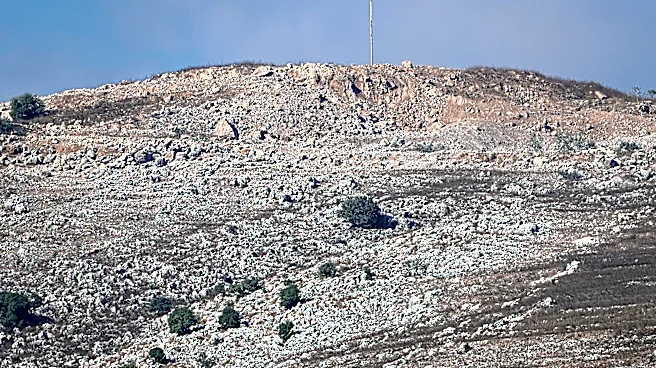
Israeli forces have reportedly withdrawn from the strategic Ali al-Taher heights in southern Lebanon and repositioned towards the Shakif area after successfully destroying a significant underground network belonging to Hezbollah. This tactical repositioning
follows days after Israel announced it had established operational control over the ridge and dismantled Hezbollah infrastructure there. The Israeli military and political leadership are expected to convene discussions regarding the broader deployment of forces in southern Lebanon in the aftermath of this operation. The underground complex beneath Ali al-Taher, described by Israel as a major Hezbollah facility, reportedly stretched for approximately two kilometers and contained command centers, weapons storage, living quarters, and various armaments including rockets, missiles, drones, and anti-tank weapons. The operation culminated in the destruction of much of this infrastructure, with the resulting blasts registering as seismic activity. This redeployment occurs amidst a stalled U.S.-brokered framework for southern Lebanon, which envisioned a gradual repositioning of Israeli forces as the Lebanese army expanded its security role and Hezbollah moved towards disarmament.
Why It's Important?
This Israeli military action and subsequent redeployment are significant for several reasons. Firstly, the destruction of a major Hezbollah underground network represents a substantial blow to the group's operational capabilities in southern Lebanon, potentially degrading its ability to launch attacks against Israel. Secondly, the tactical withdrawal from Ali al-Taher, a strategically important ridge, indicates a calculated military decision to secure gains while potentially avoiding prolonged direct confrontation in that specific area. This move could be interpreted as Israel asserting its security interests while navigating the complexities of the stalled U.S.-brokered framework. The ongoing military operations by Israel in southern Lebanon, despite ceasefire frameworks, underscore the persistent security concerns that drive its actions. This situation further complicates efforts to achieve a lasting peace and stability in the region, as Lebanese officials continue to call for an end to Israeli attacks and the withdrawal of its forces. The incident highlights the fragility of existing agreements and the continuous cycle of military engagement and response.
What's Next?
The immediate next step involves discussions within the Israeli military and political leadership regarding the broader deployment of forces in southern Lebanon following this operation. While the current repositioning is tactical, it does not necessarily signal a wider withdrawal from the region, as Israeli officials continue to prioritize security considerations and the maintenance of strategically important positions. The stalled U.S.-brokered framework for southern Lebanon remains a critical backdrop, and the recent Israeli actions may further complicate its implementation. Lebanese officials are expected to continue their calls for an end to Israeli military operations and a full withdrawal of Israeli forces from southern Lebanon. The international community will likely monitor the situation closely for any escalation or further military actions. The long-term implications will depend on whether these actions lead to renewed diplomatic efforts to revive the stalled framework or if they contribute to a further entrenchment of military postures by both sides.
Beyond the Headlines
The destruction of Hezbollah's underground infrastructure and Israel's subsequent redeployment highlight the persistent challenge of dealing with non-state actors operating within sovereign territories. This event underscores the ongoing 'shadow war' and direct confrontations between Israel and Iran-backed groups, which often bypass traditional state-to-state conflict dynamics. The U.S.-brokered framework, designed to de-escalate tensions and promote disarmament, faces significant hurdles when one party perceives an existential threat and acts unilaterally to neutralize it. This situation also raises questions about the effectiveness of international mediation efforts when fundamental security concerns remain unaddressed. The long-term implications could include a re-evaluation of regional security strategies by all parties, potentially leading to increased militarization or renewed diplomatic pushes for more robust and enforceable agreements. The incident also serves as a stark reminder of the human and infrastructural costs of prolonged conflict in the region.


