







What's Happening?
General Atomics has declared its readiness to meet the U.S. Air Force's ambitious production targets for autonomous aircraft. Mike Shortsleeve, Vice President of Strategic Development at General Atomics, stated at AFA's Air, Space and Cyber conference
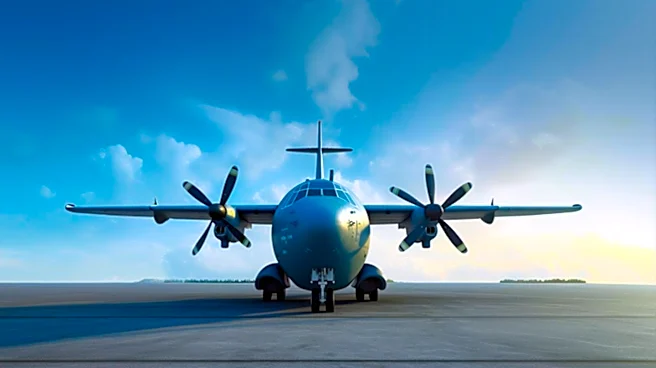
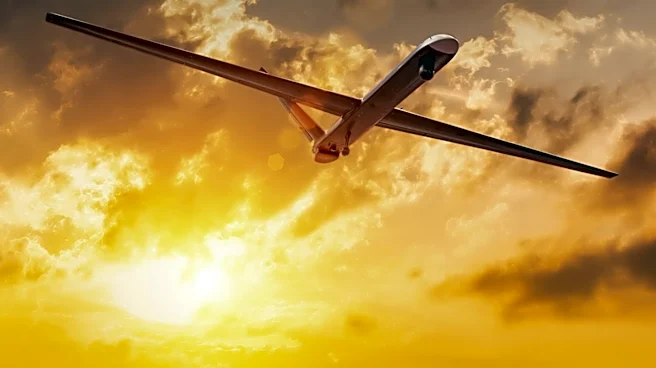
in National Harbor, Maryland, that the company's Collaborative Combat Aircraft (CCA) line is fully tooled and operational. The Air Force aims to deploy 1,000 new autonomous aircraft by 2032, with an equal split between Massed Modular Aircraft (MMA) and CCAs. The initial target includes 100 MMAs by 2029. Shortsleeve highlighted the company's past experience with MQ-9 Reaper production, where they built an aircraft every three days at peak, as a testament to their capability to achieve these new goals. General Atomics is proposing its Wildfire design for the MMA competition, demonstrating confidence in its skilled workforce and existing infrastructure to scale production effectively.
Why It's Important?
This development is crucial for U.S. national defense and the aerospace industry. The U.S. Air Force's push for 1,000 autonomous aircraft signifies a major strategic shift towards integrating advanced uncrewed systems into its combat operations, enhancing capabilities while potentially reducing risks to human pilots. General Atomics' readiness to meet these aggressive timelines suggests that the technological and manufacturing infrastructure exists within the U.S. to support this modernization. Success in this endeavor could solidify the U.S.'s leadership in autonomous military aviation, influencing future defense strategies and procurement globally. For General Atomics, securing these contracts would mean significant revenue and a strengthened position as a key defense contractor, potentially leading to job creation and technological advancements within the U.S. aerospace sector. Conversely, delays or failures in meeting these targets could impact national security objectives and potentially open opportunities for rival nations in autonomous warfare technology.
What's Next?
The immediate next step involves the U.S. Air Force proceeding with its acquisition process for both Massed Modular Aircraft (MMA) and Collaborative Combat Aircraft (CCA). General Atomics will likely continue to showcase its Wildfire design for the MMA competition and further demonstrate the production capabilities of its CCA line. The Air Force will need to finalize contracts and allocate funding to ensure the 2029 and 2032 targets are met. Other defense contractors will also be vying for these contracts, leading to a competitive environment. The progress of these programs will be closely monitored by defense analysts and policymakers, as they represent a significant investment in future warfare capabilities. Additionally, there will be ongoing efforts to integrate these autonomous systems into existing military frameworks and develop the necessary operational protocols and training for personnel.
Beyond the Headlines
The drive towards 1,000 autonomous aircraft by 2032 raises profound questions about the future of warfare and the ethical implications of increasingly autonomous military systems. While these aircraft promise enhanced operational efficiency and reduced human risk, their deployment necessitates robust discussions on command and control, accountability in decision-making, and the potential for algorithmic bias in combat scenarios. The rapid scaling of production also highlights the critical importance of a skilled manufacturing workforce and a resilient supply chain within the U.S. defense industrial base. Furthermore, the integration of such advanced technology could redefine international arms control treaties and spark a new arms race in autonomous capabilities, compelling other nations to accelerate their own development in this domain. This shift could also impact the traditional roles of human pilots and military personnel, requiring significant adaptation and retraining across the armed forces.