








What's Happening?
U.S. Transportation Secretary Sean P. Duffy announced four key regulatory actions by the Federal Aviation Administration (FAA) aimed at streamlining commercial space launch and reentry licensing. These actions are part of President Trump's initiative
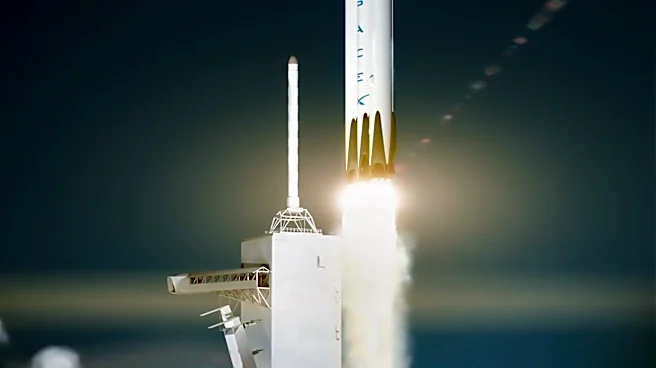
to supercharge America's commercial space industry. The FAA has issued proposed rules that define when a flight abort is not mandatory, clarify abort requirements and thresholds, and allow operators to account for vehicle breakup to rule out high-consequence multi-casualty events during random reentry. A final rule also applies minor technical corrections across commercial space regulations. Additionally, the FAA plans a comprehensive overhaul of its licensing framework in 2027 to accommodate an anticipated 1,000 launches per year by 2030. To support this growth, the agency is expanding its Office of Commercial Space Transportation workforce, hiring aerospace engineers to accelerate application turnaround while maintaining safety standards. The FAA is also seeking public and industry input on new spaceport locations and the creation of 'priority airspace' for space-launch routes.
Why It's Important?
These regulatory changes are critical for maintaining and expanding U.S. leadership in the rapidly growing commercial space sector. By reducing regulatory burdens and enhancing operational flexibility, the FAA aims to foster innovation and increase the pace of space launches and reentries. The proposed rules address key operational challenges, such as flight abort criteria and reentry safety, which can significantly impact mission planning and execution for private space companies. The planned overhaul of the licensing framework in 2027 signals a proactive approach to accommodate the projected surge in launch activity, ensuring that regulatory processes do not become a bottleneck for industry growth. The expansion of the FAA's workforce is essential to handle the increased volume of licensing applications and safety analyses, directly supporting President Trump's goal of American dominance in space. This initiative is expected to create a more favorable environment for U.S. space companies, potentially attracting more investment and talent to the sector.
What's Next?
The FAA's proposed rules will undergo a public comment period before being finalized. The agency will continue to solicit ideas from the public and industry regarding optimal locations for new spaceports and the establishment of 'priority airspace' for space-launch routes, which will be crucial for managing increased air traffic. The hiring initiative for aerospace engineers in the Office of Commercial Space Transportation is ongoing, with applications due by December 4, indicating an immediate push to bolster the agency's capacity. Looking further ahead, the comprehensive overhaul of the FAA's licensing framework is scheduled for 2027, which will be a significant undertaking to adapt regulations to the evolving needs of the commercial space industry. These actions are expected to pave the way for a substantial increase in U.S. commercial space operations, with projections of 10,000 FAA-licensed launches and reentries annually by 2035.
Beyond the Headlines
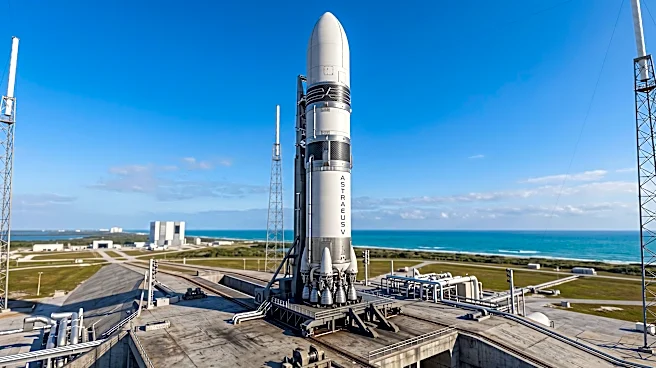
The FAA's aggressive push to streamline regulations and expand its workforce reflects a strategic national effort to secure U.S. preeminence in the global space economy. This move goes beyond mere regulatory adjustments; it signifies a fundamental shift towards treating commercial space transportation as a critical economic and strategic asset. The emphasis on 'priority airspace' for space launches suggests a future where space operations are more integrated into national air traffic management, potentially leading to new operational paradigms for both aviation and space. Furthermore, the drive to identify new spaceport locations indicates a long-term vision for distributed launch capabilities across the country, which could spur regional economic development and create new hubs for aerospace innovation. This comprehensive approach underscores the U.S. commitment to fostering a robust and competitive commercial space industry, with implications for national security, technological advancement, and global leadership in space.