


What's Happening?
A pilot project in Delaware has demonstrated that electric vehicle (EV) owners can earn significant income by participating in vehicle-to-grid (V2G) systems. The project involved retrofitting four Ford EVs owned by Delmarva Power to supply electricity
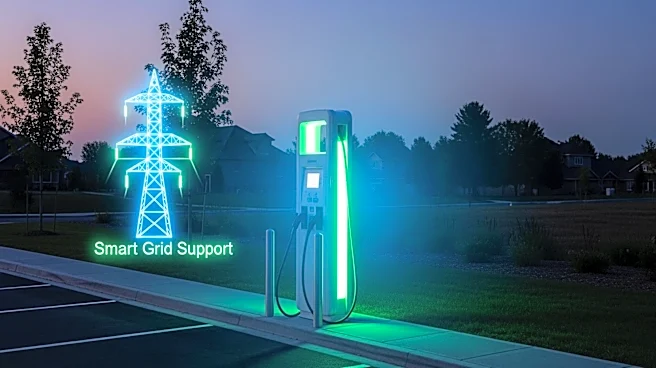
back to the power grid. According to Willett Kempton from the University of Delaware, these vehicles could earn up to $3,359 annually by selling electricity at market prices. The concept of V2G allows parked EVs to act as distributed batteries, storing excess renewable energy and supplying it during peak demand times. This approach could enhance grid reliability and support the integration of more renewable energy sources.
Why It's Important?
The adoption of V2G technology represents a significant shift in how electric vehicles can contribute to energy systems. By using EVs as mobile energy storage units, the need for large-scale battery farms could be reduced, potentially lowering infrastructure costs. This system also incentivizes EV ownership by providing a financial return, which could accelerate the transition to electric vehicles. Moreover, V2G could play a crucial role in stabilizing power grids, especially as renewable energy sources become more prevalent, addressing the intermittency issues associated with solar and wind power.
What's Next?
The widespread implementation of V2G technology faces several challenges, including the need for standardized safety protocols and compatible charging infrastructure. As more EVs become V2G-capable, utility companies and governments may need to upgrade power grids to handle increased demand and supply fluctuations. The development of cost-effective V2G systems, such as AC chargers, could facilitate broader adoption. Future efforts will likely focus on resolving technical and regulatory hurdles to enable mass-market V2G solutions.
Beyond the Headlines
The V2G initiative highlights the evolving role of electric vehicles beyond transportation, positioning them as integral components of energy systems. This shift could lead to new business models and partnerships between automakers, energy companies, and technology providers. Additionally, the environmental benefits of V2G, such as reduced reliance on fossil fuels and enhanced grid efficiency, align with global sustainability goals, potentially influencing policy decisions and investment strategies.