




What's Happening?
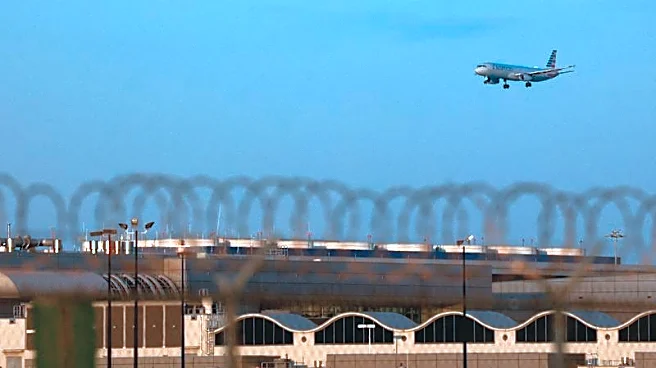
The Federal Aviation Administration (FAA) lifted a nationwide ground stop on all departing U.S. flights after a telecommunications outage disrupted air route traffic control centers. Transportation Secretary Sean Duffy confirmed that air operations were
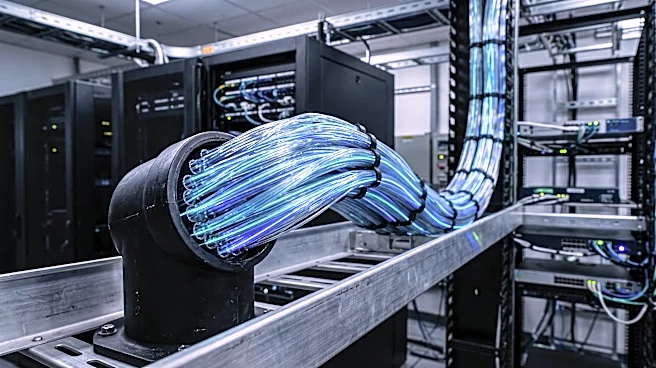
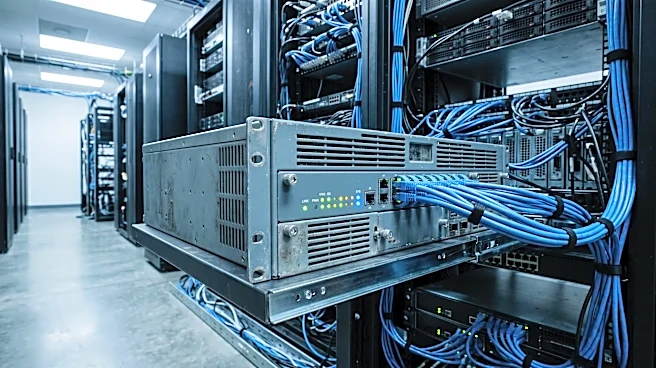
working to return to normal and assured the public that it was safe to fly. The FAA initially issued the ground stop at 3:54 PM Eastern Time on Friday and reopened the airspace at 8:15 PM ET, after more than four hours of disruption. The outage was attributed to switches and routers becoming overloaded with data, leading to inconsistent information and a system shutdown. Homeland Security Secretary Markwayne Mullin stated there was no indication of a nefarious act, characterizing it as solely a telecommunications outage. CBS News reported that senior government sources believed the issue was limited to Cisco 600 series routers manufactured between 2001 and 2006. Duffy specifically blamed 'old equipment' from the 1980s, noting that newer switches did not fail. Approximately 11,000 flights carrying over 1.5 million passengers were scheduled to depart from U.S. airports after 4 PM ET on Friday, with at least 827 flights diverted by 7:05 PM ET.
Why It's Important?
This incident highlights the critical reliance of the U.S. air travel system on robust and modern telecommunications infrastructure. A nationwide ground stop, even for a few hours, can cause significant economic disruption, affecting thousands of flights and millions of passengers. The revelation that 'old equipment' from the 1980s contributed to the outage underscores potential vulnerabilities in critical national infrastructure. Such disruptions can erode public confidence in air travel safety and operational reliability. For airlines, the financial impact includes costs associated with diversions, cancellations, passenger rebooking, and potential compensation. The event also brings into focus the ongoing debate about federal funding for infrastructure modernization, particularly within agencies like the FAA, to prevent future occurrences and ensure the resilience of essential services. The quick response to lift the ground stop and the assurance of safety are crucial for maintaining the functionality of the national airspace system.
What's Next?
Following the incident, air operations are expected to gradually return to normal, though delays and cancellations may persist as airlines work to re-route passengers and aircraft. Investigations into the root cause of the telecommunications outage are likely to continue, with a focus on identifying specific equipment failures and systemic vulnerabilities. Transportation Secretary Sean Duffy's comments about 'old equipment' suggest a renewed push for infrastructure upgrades within the FAA. This could lead to increased scrutiny of the agency's budget for modernization and potentially new legislative efforts to secure funding for critical technology replacements. Stakeholders, including airlines and passenger advocacy groups, will likely monitor these developments closely, advocating for measures that enhance reliability and prevent future disruptions. The incident may also prompt a broader review of telecommunications infrastructure across other critical sectors to identify and mitigate similar risks.
Beyond the Headlines
The FAA telecommunications outage exposes a deeper issue concerning the aging infrastructure that underpins many critical U.S. systems. The reliance on equipment from the 1980s in a sector as vital as air traffic control raises questions about long-term investment strategies and the prioritization of infrastructure maintenance. This event could serve as a catalyst for a national conversation about the state of America's foundational technologies and the potential for cascading failures when these systems falter. Beyond the immediate operational impact, there are broader implications for national security, as vulnerabilities in telecommunications could be exploited by malicious actors, even if this incident was not a cyberattack. The incident also highlights the complex interplay between technological advancement, budgetary constraints, and public safety, underscoring the need for proactive, sustained investment in modernizing the nation's essential services to ensure their resilience and reliability in an increasingly interconnected world.