




What's Happening?
Paris Carlock, a 55-year-old Frito-Lay employee from Murfreesboro, was fatally shot inside a Sam's Club on Antioch Pike in Nashville, Tennessee, early Sunday morning. The incident occurred when a bullet, originating from gunfire outside the store, pierced
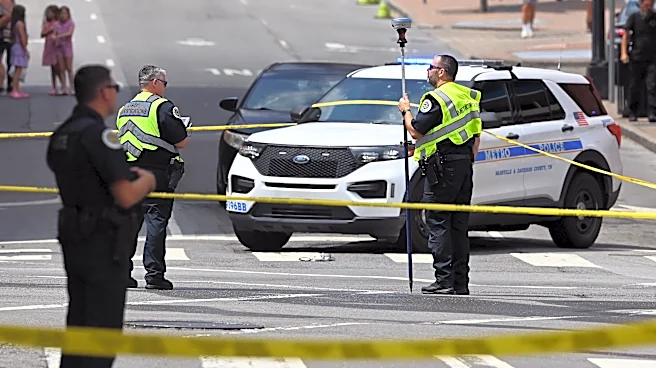
through a metal wall and struck Carlock. He was conducting product inventory in the chip aisle at approximately 4 a.m. when he was hit in the head. Store staff provided immediate assistance, and Carlock was transported to a local hospital where he was pronounced dead. Metro Nashville Police Department (MNPD) investigators reported that the gunfire stemmed from an altercation that began at the nearby LAVO Lounge. Security personnel removed individuals involved in the dispute from the lounge, and the confrontation continued outside, leading to shots being fired as multiple vehicles departed the area. Carlock's daughter, Kayla Carlock, expressed profound grief, describing her father as a loving and humble man, and urged those responsible to come forward. Both Sam's Club and PepsiCo, Frito-Lay's parent company, have issued statements expressing their condolences and commitment to cooperating with law enforcement.
Why It's Important?
This tragic event underscores the escalating concern over gun violence spilling into public spaces, impacting innocent bystanders and employees. The death of Paris Carlock, a Frito-Lay worker performing his duties, highlights the vulnerability of individuals in seemingly safe commercial environments when external conflicts escalate to gunfire. This incident could prompt businesses, particularly those located near entertainment venues or in areas with higher crime rates, to re-evaluate and enhance their security measures, including structural reinforcements and increased surveillance, to protect both customers and staff. For the retail and logistics industries, it raises questions about employee safety protocols during off-peak hours and the potential need for stricter security assessments of store locations. The emotional toll on Carlock's family and the broader community in Nashville is significant, potentially leading to increased public demand for more stringent gun control measures or enhanced police presence in commercial districts. Furthermore, the incident could influence insurance premiums and liability considerations for businesses operating in areas prone to such violence, ultimately affecting operational costs and consumer prices.
What's Next?
Metro Nashville Police Department Homicide Unit detectives are actively pursuing leads in the investigation. As of now, no arrests have been publicly announced, nor has a shooter been identified. The police are urging anyone with information regarding the gunfire or the vehicles involved to contact Nashville Crime Stoppers, offering anonymity and a potential cash reward for tips. The ongoing investigation will focus on identifying and apprehending the individuals responsible for the shooting. This incident may also lead to a review of security protocols at the LAVO Lounge and other similar establishments in the area, potentially resulting in new regulations or enforcement actions regarding crowd control and conflict resolution. Businesses like Sam's Club might consider implementing additional security measures, such as reinforced building materials or increased security personnel, to mitigate future risks. The community will likely continue to grapple with the implications of this violence, potentially leading to public discussions and advocacy for solutions to prevent similar tragedies.
Beyond the Headlines
The fatal shooting of Paris Carlock extends beyond a singular act of violence, touching upon broader societal issues concerning public safety, urban planning, and corporate responsibility. The penetration of a bullet through a commercial building's metal wall raises questions about the adequacy of current construction standards in protecting against external threats, particularly in areas where gun violence is a concern. This incident could spark a re-evaluation of building codes and safety regulations for commercial properties, potentially leading to mandates for more resilient structures. Ethically, the event highlights the precarious position of essential workers who, while performing their jobs, become unwitting victims of external conflicts. It underscores the need for a societal reckoning with the pervasive nature of gun violence and its ripple effects on everyday life. Culturally, such incidents contribute to a growing sense of insecurity in public spaces, potentially altering consumer behavior and community engagement. The long-term implications could include a shift in how businesses assess risk, how communities perceive safety, and how policymakers address the complex interplay between urban development, public order, and the proliferation of firearms.