


What's Happening?
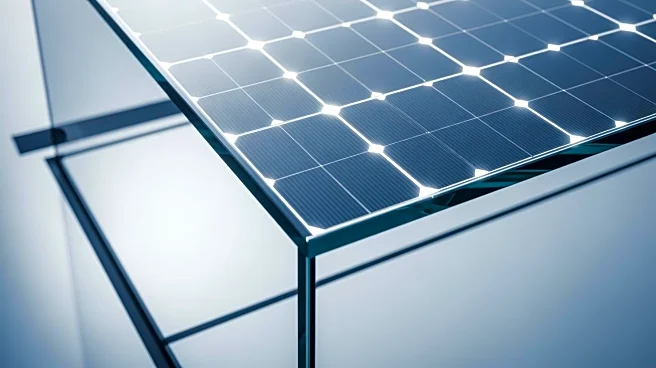
South Korean engineers have introduced a self-powered smart window technology that addresses high energy consumption and costs associated with climate control in buildings. Developed by Blue Device at the Korea Advanced Institute of Science & Technology
(KAIST), this innovation uses nanoparticle liquid within the glass to create a self-contained energy system. Recognized at CES 2026, the smart window eliminates the need for external power sources and complex wiring, offering a sustainable solution for modern offices and off-grid locations. The technology can reduce building energy use by up to 40%, providing a scalable way for cities to decarbonize.
Why It's Important?
Buildings account for nearly 40% of global energy demand, with windows being a major source of thermal leakage. The introduction of self-powered smart windows represents a significant advancement in reducing energy waste and improving building efficiency. This technology could transform urban infrastructure by lowering carbon emissions and operational costs, making it a critical component in the fight against climate change. The ability to install high-efficiency climate control systems without external power could revolutionize building design and contribute to global sustainability efforts.