






What's Happening?
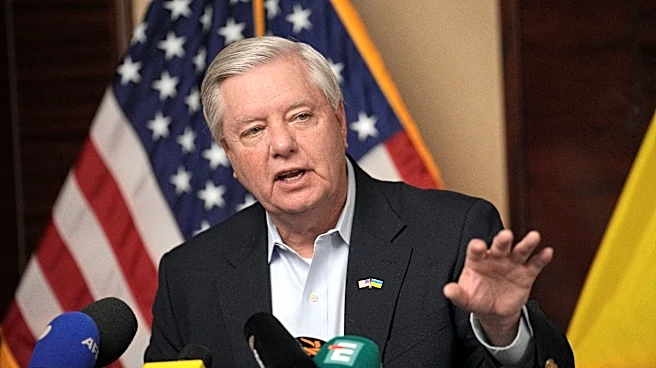
Senator Lindsey Graham has died at the age of 71 after returning from a trip to Kyiv, Ukraine, where he met with Ukrainian President Volodymyr Zelenskyy. The cause of death was reported as a 'sudden illness.' Graham, a prominent Republican senator, was known
for his strong support of Ukraine amidst its ongoing conflict with Russia. His passing leaves a vacancy in the Senate, which will be filled by an appointee from the governor, who is also a Republican. This development necessitates a replacement on the ballot, with the party expected to follow its internal rules to select a new candidate.
Why It's Important?
The death of Senator Graham is significant as it impacts the political landscape in the U.S. Senate, where his seat will need to be filled promptly. As a senior Republican figure, Graham's absence may influence legislative dynamics, particularly in areas where he was a vocal advocate, such as foreign policy and defense. His support for Ukraine was a key aspect of his political stance, and his passing could affect U.S. foreign policy discussions. The appointment of his successor will be closely watched, as it could shift the balance of power or influence within the Senate.
What's Next?
The immediate next step involves the appointment of a temporary replacement by the governor, followed by a special election to permanently fill the Senate seat. The Republican Party will need to organize a primary to select a candidate for the upcoming election, which is expected to occur within a short timeframe. This process will be crucial in determining the future political representation of Graham's constituency and could have broader implications for the Republican Party's strategy and cohesion.