
What's Happening?
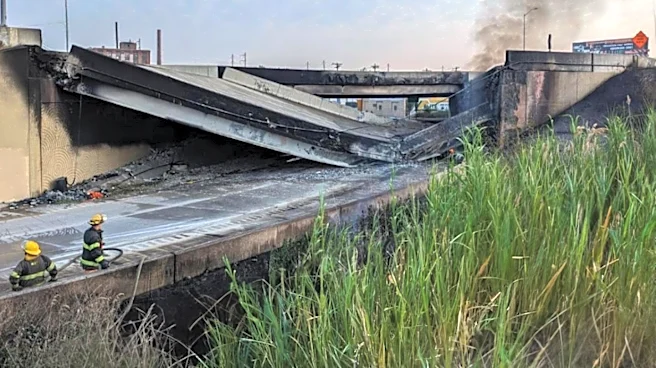
The U.S. Department of Transportation has committed $4.25 million in emergency funding to rebuild the Lower Cibola Bridge in La Paz County, Arizona. This bridge, also known as the Hart Mine Road Bridge,
collapsed in July after a wildfire compromised its supports. Senators Mark Kelly and Ruben Gallego announced the federal pledge, highlighting the bridge's critical role as a primary access point for local farmers, residents, federal workers, and emergency responders. Its destruction has forced significant detours, extending travel times from minutes to over an hour for local farmers, and forcing them to use unsuitable dirt roads for farm equipment.
Why It's Important?
The federal funding to rebuild the Lower Cibola Bridge is crucial for the economic and social well-being of the affected region. The bridge serves as a vital artery for agricultural operations, connecting farms to essential routes and markets. Its collapse has not only increased operational costs and travel times for farmers but also posed safety risks due to the use of unpaved, inadequate roads for heavy farm machinery. For residents and emergency services, the bridge's absence means longer response times and reduced accessibility, which can have serious consequences in critical situations. This federal intervention underscores the importance of infrastructure resilience, especially in areas prone to natural disasters like wildfires, and aims to restore essential connectivity for the community.
What's Next?
With the $4.25 million in emergency funding secured, the next steps will involve planning and executing the reconstruction of the Lower Cibola Bridge. This process will likely include engineering assessments, procurement of materials, and the commencement of construction work. Local authorities, in coordination with federal agencies, will aim to expedite the rebuilding process to minimize ongoing disruptions to the community. The focus will be on constructing a resilient bridge that can withstand future environmental challenges. The project will also likely involve continued communication with affected stakeholders, particularly local farmers and residents, to keep them informed about progress and expected completion timelines.
Beyond the Headlines
The destruction of the Lower Cibola Bridge by wildfire and the subsequent federal response highlight broader issues concerning infrastructure vulnerability in the face of climate change and increasing natural disasters. As wildfires become more frequent and intense, critical infrastructure like bridges, roads, and power lines are at greater risk. This incident underscores the need for proactive infrastructure planning that incorporates climate resilience measures, rather than solely relying on post-disaster recovery. It also brings to light the economic ripple effects of infrastructure failures, particularly in rural and agricultural communities where alternative routes may be scarce or unsuitable. The federal government's swift action, while necessary, also points to the growing financial burden of repairing and rebuilding infrastructure damaged by environmental events, prompting questions about long-term preventative strategies and funding mechanisms.