




What's Happening?
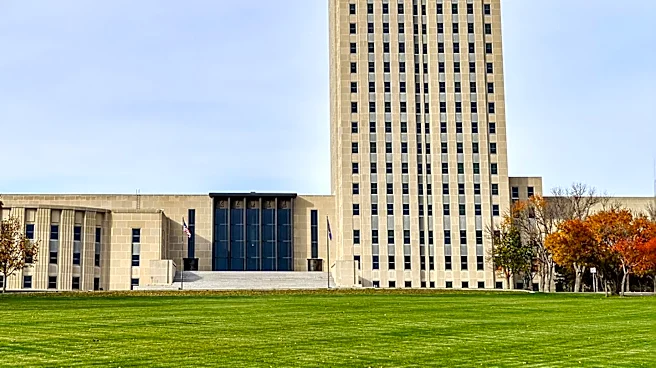
The North Dakota Legislature is set to convene a special session next month to consider five key bills, primarily focusing on the regulation of kratom. Governor Kelly Armstrong initiated the special session due to concerns over kratom products, which
were previously sold without state or federal oversight and contain compounds that can act as stimulants or have opioid-like effects in concentrated forms. Two bills concerning kratom have been unanimously approved by Legislative Management: one proposes a complete ban on kratom products and derivatives, while the other seeks to regulate natural kratom, outlaw synthetic versions, and establish a minimum age of 21 for its use. Additionally, legislators will address funding for a halted military gallery project at the North Dakota Heritage Center, which ran out of money despite being partially funded by taxpayers. The State Historical Society failed to raise its required share of private donations, leaving the state in potential breach of contract.
Why It's Important?
The special session's focus on kratom regulation highlights a growing public health concern regarding unregulated substances available in the market. The potential ban or strict regulation of kratom could set a precedent for how states address emerging substances with unclear health implications, impacting both consumers and businesses involved in their sale. For the military gallery project, the need for additional funding underscores challenges in public-private partnerships and the financial oversight of state-funded initiatives. Failure to secure funding could result in significant financial penalties for the state due to contract breaches and leave an important cultural project incomplete. These legislative actions reflect the state's efforts to balance public safety, fiscal responsibility, and the preservation of historical and cultural assets, with direct implications for North Dakota's residents and its financial health.
What's Next?
The full North Dakota Legislature will vote on the five selected bills during the special session scheduled for next month. The outcome of these votes will determine the future of kratom sales and regulation in the state, potentially leading to either a complete prohibition or a regulated market with age restrictions. For the military gallery project, the legislative decision will dictate whether the state provides additional funding to complete the construction or faces the consequences of a breached contract. Stakeholders, including kratom vendors, public health advocates, and the State Historical Society, will be closely monitoring these proceedings. The special session will also likely involve discussions on accountability for the funding shortfall of the military gallery project, as indicated by Senate Majority Leader David Hogue.
Beyond the Headlines
The debate over kratom regulation in North Dakota reflects a broader national discussion about the control of substances that exist in a legal gray area, often marketed as dietary supplements but possessing psychoactive properties. The legislative response could influence how other states approach similar issues, balancing individual freedoms with public health concerns. The military gallery funding crisis, on the other hand, points to systemic issues in project management and fundraising for public institutions. It raises questions about the due diligence performed before initiating large-scale projects and the mechanisms in place to ensure financial viability. The resolution of this issue could lead to reforms in how state-funded projects are managed and how private donations are secured, potentially impacting future cultural and historical initiatives across the state.