


What's Happening?
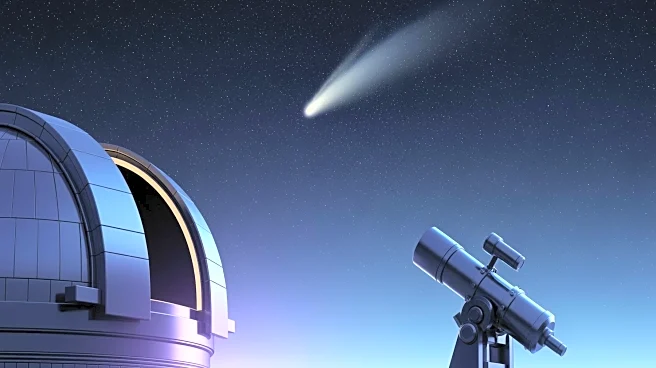
The United Nations' International Asteroid Warning Network (IAWN) is actively monitoring the interstellar comet 3I/ATLAS as it approaches Earth. The comet is expected to come within approximately 167 million miles of the planet on December 19. This initiative
involves over 80 observatories and citizen scientists worldwide, aiming to enhance the accuracy of tracking such celestial objects. The IAWN, coordinated by NASA, is utilizing this opportunity to test new astrometry techniques, which are crucial for determining the precise positions of comets and asteroids. This effort is part of a broader campaign to improve the technical capabilities for tracking near-Earth objects, which could inform future space missions.
Why It's Important?
The monitoring of comet 3I/ATLAS by the IAWN is significant for several reasons. It represents a collaborative international effort to improve the tracking of interstellar objects, which is essential for planetary defense and future space exploration. By refining astrometry techniques, scientists can better predict the paths of comets and asteroids, potentially preventing catastrophic impacts on Earth. Additionally, the data collected could aid in planning missions to similar objects, enhancing our understanding of the solar system and beyond. This initiative underscores the importance of global cooperation in addressing challenges posed by space objects.
What's Next?
The IAWN plans to publish its findings on comet 3I/ATLAS in a peer-reviewed journal next year. This will provide valuable insights into the comet's behavior and trajectory. The network's ongoing efforts will continue to focus on improving tracking techniques, which could lead to more accurate predictions and better preparedness for potential asteroid threats. Future campaigns are also planned, including observations of the near-Earth asteroid Apophis between 2027 and 2029. These initiatives will further enhance the scientific community's ability to monitor and respond to celestial events.