





What's Happening?
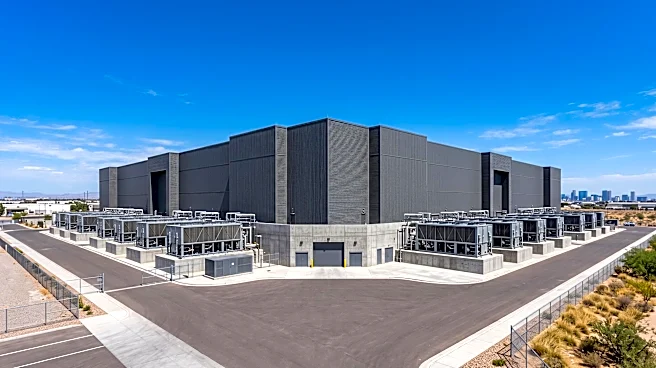
Taylor Frazier McCollum, a Maryland resident, has emerged as a prominent activist against data center development in Prince George's County, successfully leading efforts to block a proposed $5 billion data center campus. The project was slated for nearly
90 acres of former Landover Mall land in a predominantly Black community. Despite facing personal financial hardships, including eviction and job instability, Frazier McCollum initiated a petition that garnered over 25,000 signatures, organized widely attended protests, and testified at the state capitol. Her activism culminated in moratoriums on data centers throughout the county, effectively halting the large-scale development. She has become the public face of data center activism, drawing an unusual coalition of socialists, environmentalists, and local residents concerned about electricity bills. Her efforts have also inspired her to consider running for political office in the future.
Why It's Important?
This case highlights the growing power of grassroots activism in influencing local land use and economic development decisions in the U.S. It demonstrates how community concerns, particularly those related to environmental impact and quality of life, can challenge large-scale corporate projects. For Prince George's County, the moratorium on data centers presents a significant economic dilemma, as the county faces a budget deficit and has lost major economic anchors. While data centers were seen by some local officials as a solution for revenue generation, Frazier McCollum's success underscores the public's increasing scrutiny of such developments, especially regarding their environmental footprint (water pollution, diesel generation) and proximity to residential areas. This situation reflects a broader national conversation about balancing economic growth with environmental protection and community well-being, and the role of citizen engagement in shaping these outcomes.
What's Next?
The immediate future for Prince George's County involves navigating the economic implications of the data center moratorium and exploring alternative development strategies. Council member Wanika Fisher has emphasized the need for a "hard discussion" about revenue sources in the absence of the data center project. Frazier McCollum herself is proposing alternative uses for the former Landover Mall site, such as a sports complex, affordable housing, or a heritage tourism site, though she acknowledges these may not be as lucrative as a data center. Her continued activism, including traveling to other communities fighting data center growth, suggests a potential for a broader, coordinated national movement against hyperscale data centers. Her personal aspirations to run for office indicate a possible shift from community organizing to direct political engagement, which could further amplify the issues she champions at a policy level.
Beyond the Headlines
Frazier McCollum's story delves into the deeper societal implications of civic engagement, particularly how individuals from challenging personal circumstances can become powerful agents of change. Her activism, rooted in a civil rights perspective, frames the fight against data centers as a struggle for environmental justice and community self-determination. The formation of a diverse coalition, including socialists and environmentalists, highlights the intersectionality of various social and economic issues. This narrative challenges traditional notions of who participates in activism, demonstrating that personal hardship can fuel a profound commitment to public good. The conflict between community-led environmental protection and local government's pursuit of revenue also exposes underlying tensions in urban planning and economic policy, prompting a re-evaluation of what constitutes sustainable and equitable development in U.S. communities.