
What's Happening?
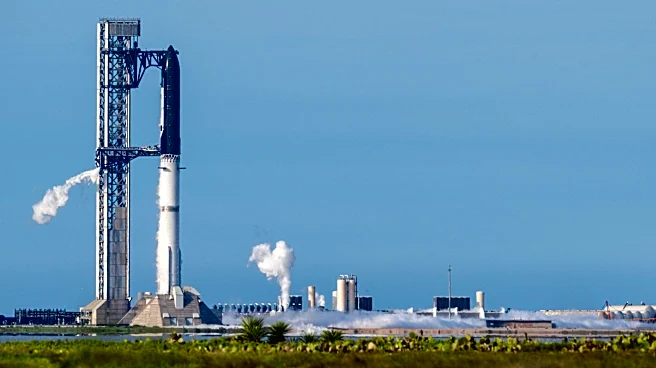
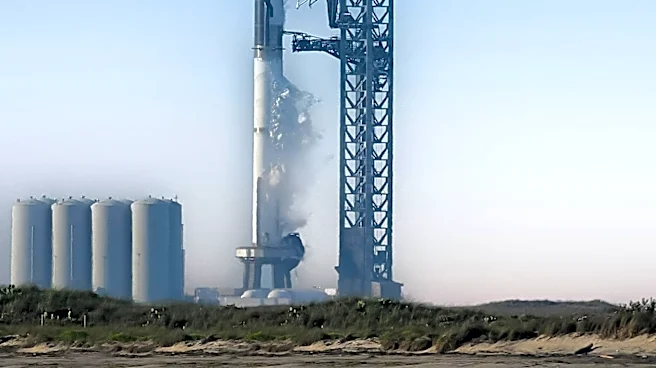
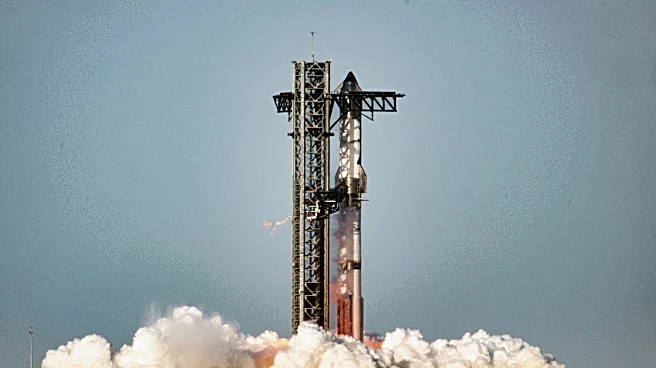
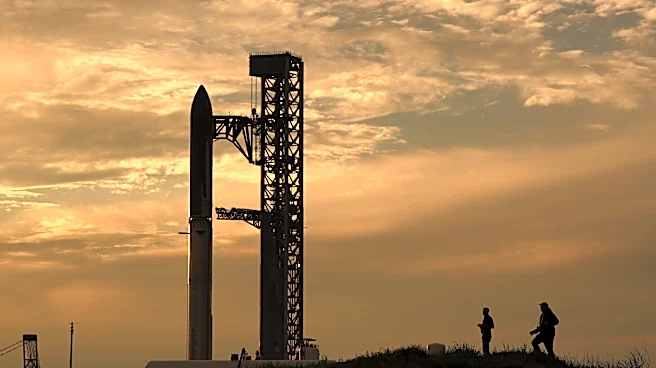
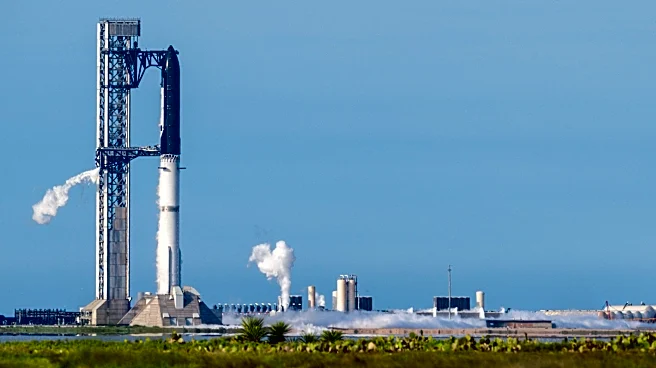
On November 14, 2026, SpaceX's Starship spacecraft, designated Ship 42, successfully completed its first-ever catch by the mechanical arms of the 'Mechazilla' launch tower at its Starbase facility in Texas.
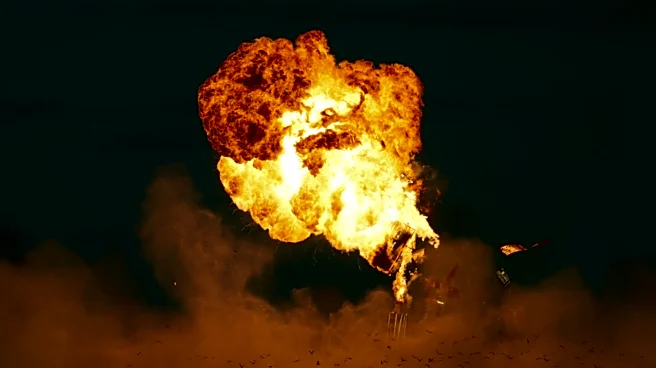
This historic event followed a 22-hour flight during which Starship completed 14 orbits around Earth and deployed 26 Starlink V3 satellites. As the spacecraft descended, its three Raptor engines reignited before it was precisely caught by the tower's arms, a significant step towards full reusability of orbital vehicles. However, the mission also saw the first-stage Super Heavy booster explode shortly after liftoff. The booster's engines stopped firing prematurely, causing its guidance system to steer it away from its intended 'double catch' maneuver and self-destruct in the Gulf of Mexico. SpaceX is currently investigating the root cause of the booster's early boostback burn and low fuel indication.
Why It's Important?
The successful catch of the Starship upper stage is a monumental achievement for SpaceX and the broader space industry, significantly de-risking the concept of full and rapid reusability for orbital launch vehicles. Historically, recovering and reusing rockets has been a major challenge due to the extreme conditions of re-entry. This breakthrough could drastically reduce the cost of space expeditions, making space travel more economical and accessible. Wall Street analysts have reacted positively, with firms like Citigroup, Morgan Stanley, Goldman Sachs, and Wells Fargo upgrading their outlooks and price targets for SpaceX, citing the de-risking of long-term market opportunities across its segments, including connectivity and AI. The ability to reuse the Starship could accelerate the deployment of Starlink satellites and support future ambitious projects like lunar and Martian missions, including NASA's Artemis program, for which Starship is expected to serve as a lunar lander.
What's Next?
SpaceX engineers are currently investigating the cause of the Super Heavy booster's explosion, specifically the early boostback burn and low fuel indication. The company will also analyze the condition of Ship 42's heat shield. If the heat shield is found to be in good condition, there is a possibility that this specific Starship could be reused for its next flight, Flight 16. This would further validate the reusability concept and potentially accelerate Starship's launch cadence assumptions for 2027-2028. The success of this mission is expected to influence future design and operational strategies for both the Starship and Super Heavy booster, with a continued focus on achieving full reusability for both stages to unlock even greater cost efficiencies and mission capabilities.
Beyond the Headlines
This successful Starship catch represents a paradigm shift in space exploration, moving beyond the traditional expendable rocket model. The 'Mechazilla' catch system, often described as 'chopstick-like mechanical arms,' showcases an innovative approach to rocket recovery that could inspire new engineering solutions across various high-tech industries. The long-term implications extend to the democratization of space, potentially enabling more frequent and affordable access to orbit for a wider range of commercial, scientific, and governmental endeavors. While the booster loss highlights the inherent risks and complexities of cutting-edge aerospace development, the overall success of the Starship recovery underscores a relentless pursuit of technological advancement that could redefine humanity's presence in space and open new frontiers for orbital computing and interplanetary travel.