






What's Happening?
U.S. Senator Kevin Cramer played a key role in formalizing a partnership between the University of North Dakota (UND) and Vorbeck Materials. This collaboration, solidified through a memorandum of understanding signed on November 4, 2026, during the Space
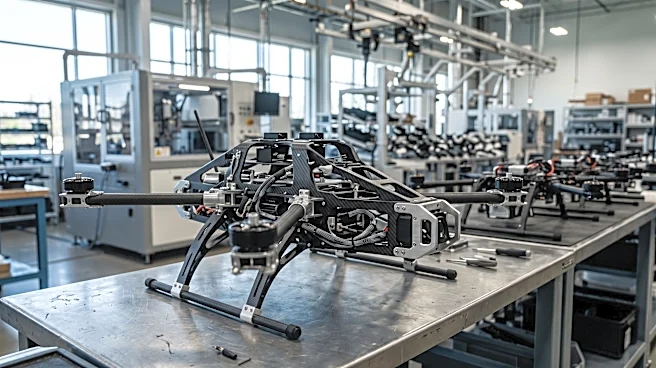
Operations Summit in Grand Forks, aims to advance research in materials science, aerospace, unmanned systems, and defense. Senator Cramer emphasized the importance of such partnerships in keeping pace with rapid technological changes and developing solutions for emerging challenges. The agreement combines UND’s research strengths in areas like aerospace and national security with Vorbeck’s expertise in advanced materials and manufacturing, creating a pathway to move emerging technologies from laboratory research to real-world applications. Vorbeck Materials, founded in 2006, specializes in graphene-based technologies for various applications, including military and aerospace, and recently established a manufacturing facility in Grand Forks.
Why It's Important?
This partnership is significant for several reasons. It fosters innovation and technological advancement within the U.S., particularly in critical sectors like aerospace and national security. By bridging the gap between academic research and industrial application, it accelerates the development and deployment of cutting-edge technologies. This collaboration can lead to the creation of new products and solutions that enhance national defense capabilities and contribute to economic growth through job creation and increased investment in research and development. For North Dakota, it positions the state as a hub for advanced technology and manufacturing, attracting talent and resources. The focus on advanced materials and unmanned systems also aligns with broader U.S. strategic interests in maintaining a technological edge globally, potentially impacting future defense strategies and commercial space endeavors.
What's Next?
The collaboration between UND and Vorbeck Materials is expected to explore various avenues, including joint research projects, technology development initiatives, workforce training programs, and opportunities for federal funding. This will likely involve ongoing engagement between researchers, engineers, and industry professionals to translate scientific discoveries into practical applications. The establishment of Vorbeck's manufacturing facility in Grand Forks suggests a commitment to local production and further integration with regional research capabilities. Future developments could include specific projects in graphene-based technologies for military and aerospace applications, as well as advancements in autonomous systems. The success of this partnership could also serve as a model for similar collaborations across the nation, encouraging more synergy between academic institutions and private industry in critical technology sectors.
Beyond the Headlines
Beyond the immediate technological advancements, this partnership highlights a growing trend of regional innovation ecosystems where universities, industry, and government collaborate to drive progress. It underscores the recognition that complex technological challenges require diverse expertise and integrated approaches. The emphasis on national security and defense-related research also points to the increasing role of academic and private sector contributions to U.S. strategic interests. Furthermore, the focus on advanced materials like graphene could have long-term implications for various industries, potentially leading to more efficient, durable, and lightweight components for everything from consumer electronics to infrastructure. This initiative also reflects a broader effort to strengthen domestic manufacturing and reduce reliance on foreign supply chains for critical technologies, enhancing economic resilience and national security.