






What's Happening?
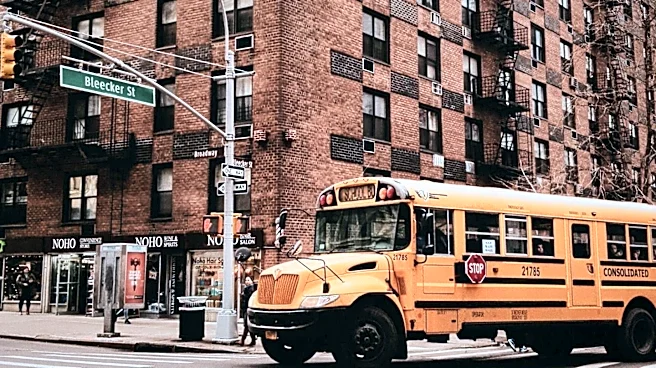
Mayor Zohran Mamdani of New York City is focusing on improving bus services as part of his affordability agenda. The plan, developed in collaboration with Governor Kathy Hochul, aims to enhance bus speed through investments in quicker routes, new equipment,
and improved bus stops. The initiative is backed by a $900 million budget over five fiscal years, targeting 50 bus corridors with initial efforts concentrated on five key routes in Brooklyn, Queens, and the Bronx. The strategy includes strengthening maintenance operations, implementing all-door boarding, and ensuring functional tap-to-pay features on buses. Additionally, bus stops will be upgraded with seats, shelters, trees, and real-time schedule information. The plan also involves expanding bus lanes and using automated cameras to enforce transit lane regulations. While the improvements are expected to reduce commute times and traffic collisions, critics express concerns about potential congestion and parking issues.
Why It's Important?
The initiative to accelerate bus services in New York City is significant as it addresses the city's public transportation challenges, which affect millions of residents. By improving bus speed and reliability, the plan aims to enhance the daily commute for New Yorkers, potentially reducing traffic congestion and improving air quality. The focus on 'fast' over 'free' is driven by budgetary constraints, as making buses free would require substantial financial resources from the city and state. The plan's success could set a precedent for other cities facing similar public transportation issues, highlighting the importance of strategic investments in infrastructure to improve urban mobility. However, the financial implications and potential impact on traffic and parking remain critical considerations for stakeholders.
What's Next?
The city has already begun construction to expand bus lanes in major corridors, such as Manhattan's Lexington and Madison Avenues. The goal is to achieve many of the planned improvements by 2027. The 'free' aspect of the bus service remains uncertain, as it would require additional funding and could potentially slow down bus services, as seen in previous experiments. Stakeholders, including city officials and residents, will continue to monitor the progress and impact of the initiative, with potential adjustments based on feedback and results from the initial phases.