



What's Happening?
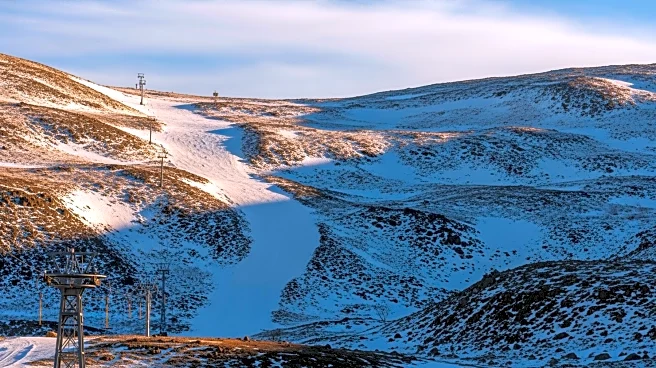
The Bláfjöll ski area near Reykjavik, Iceland, is experiencing significant operational challenges due to record-low snowfall this winter. According to Einar Bjarnason, the operations manager at Bláfjöll, the ski area was prepared to open just before Christmas.
However, a three-week period of rain prevented the opening. The ski area has been relying heavily on artificial snow produced by eight snow cannons since early December. Despite these efforts, warm and wet weather conditions have hindered the ability to maintain adequate snow coverage. The Icelandic Meteorological Office has reported unusually low precipitation in Reykjavik during December and January, marking the lowest January precipitation since 1959. This has limited both natural snowfall and the effectiveness of snowmaking, resulting in minimal use of the ski lifts and an unclear timeline for the full opening of the slopes.
Why It's Important?
The situation at Bláfjöll ski area highlights the broader impact of changing weather patterns on winter sports and tourism industries. Ski resorts are significant contributors to local economies, attracting tourists and providing seasonal employment. The inability to open fully due to insufficient snow can lead to financial losses for the resort and affect the local economy reliant on winter tourism. Additionally, the reliance on artificial snowmaking raises concerns about environmental sustainability and resource use, as it requires significant water and energy. This situation underscores the challenges ski resorts face in adapting to climate variability and the potential need for innovative solutions to ensure operational viability in the future.
What's Next?
The Bláfjöll ski area will continue to monitor weather conditions and utilize artificial snowmaking to prepare for potential openings. However, the timeline for a full opening remains uncertain, dependent on future weather patterns. The ski area may need to explore alternative strategies to mitigate the impact of low natural snowfall, such as diversifying winter activities or investing in more efficient snowmaking technologies. Stakeholders, including local businesses and tourism operators, will likely advocate for measures to support the ski area and mitigate economic impacts. Additionally, this situation may prompt discussions on long-term strategies for ski resorts to adapt to changing climate conditions.