


What's Happening?
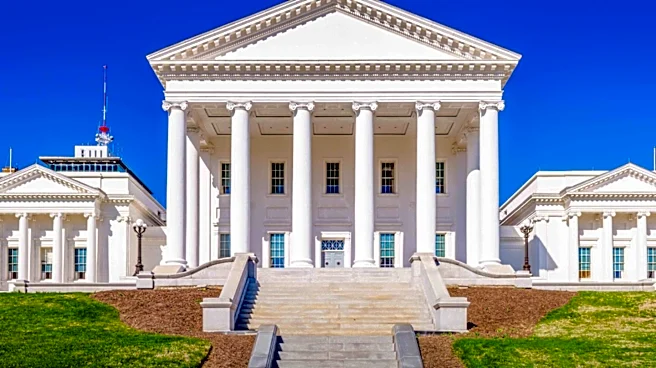
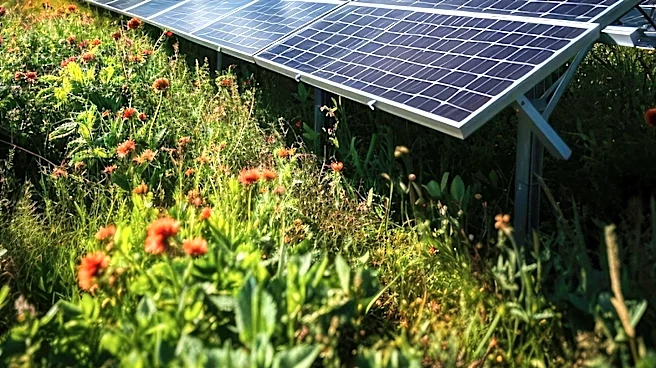
Virginia has enacted a new law that officially defines 'agrivoltaics,' allowing the dual use of land for agriculture and solar photovoltaics. This initiative aims to address the state's rising energy demands and the rapid loss of farmland by enabling
the use of the same land for both farming and solar energy production. The law, which received bipartisan support, is expected to provide affordable, clean power while supporting farmers' livelihoods. Virginia is the fourth state in the U.S. to pass such a law, which proponents believe will help meet the state's renewable energy goals and mitigate the environmental impact of large-scale solar projects.
Why It's Important?
The agrivoltaics law is significant as it represents a shift from viewing solar energy and agriculture as competing interests to seeing them as complementary. This approach could help Virginia meet its renewable energy targets while preserving farmland and supporting local agriculture. The law also addresses concerns about the environmental impact of solar farms, which have been criticized for contributing to the loss of farmland. By integrating solar panels with agricultural activities, the state aims to create a sustainable model that benefits both the energy sector and rural communities.
What's Next?
With the law in place, Virginia is expected to see an increase in agrivoltaics projects, which could serve as a model for other states facing similar challenges. The success of these projects will depend on effective implementation and collaboration between farmers, solar developers, and policymakers. As the state moves forward, it will be important to monitor the impact of agrivoltaics on energy production, agricultural output, and rural economies.