







What's Happening?
The Obama Presidential Center in Chicago, designed by architects Billie Tsien and Tod Williams, reflects the significant influence of President Barack Obama in its architectural design. The center, characterized by its unconventional 225-foot-tall tower,
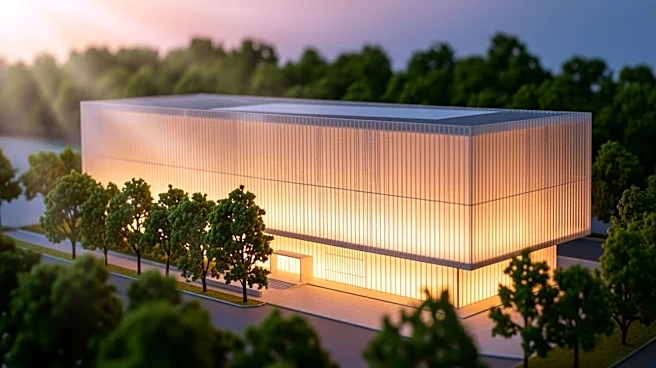
diverges from typical Chicago high-rise structures by emphasizing a solid, earthbound form rather than a steel-framed, glass-clad design. Obama, who expressed a keen interest in architecture, was actively involved in the design process, making numerous suggestions that shaped the final outcome. The center's design is a contemporary take on the traditional 'treasure box' museum, featuring a largely solid structure with minimal windows, reminiscent of 19th and 20th-century architectural styles. The building's exterior is clad in granite sourced from New Hampshire, chosen for its unique ability to change character with weather conditions.
Why It's Important?
The Obama Presidential Center is significant as it represents a monumental architectural achievement that embodies both the legacy of President Obama and the broader cultural and historical narratives of the United States. The center's design challenges conventional architectural norms, offering a new perspective on how presidential legacies can be commemorated through architecture. It serves as a cultural and educational hub, potentially attracting visitors and scholars interested in Obama's presidency and its impact on American society. The center also contributes to the revitalization of Chicago's Jackson Park, enhancing the local community's cultural landscape and providing a space for public engagement and learning.
What's Next?
As the Obama Presidential Center prepares for its official opening, it is expected to become a focal point for cultural and educational activities in Chicago. The center will host various events and programs organized by the Obama Foundation, aimed at fostering civic engagement and leadership development. The architectural design, with its unique features and public spaces, is likely to attract significant attention from both architectural enthusiasts and the general public. The center's impact on the local community and its role in preserving and promoting the legacy of President Obama will be closely observed in the coming years.
Beyond the Headlines
The Obama Presidential Center's design raises broader questions about the role of architecture in shaping public memory and identity. By deviating from traditional architectural forms, the center challenges perceptions of how presidential legacies are physically represented. It also highlights the potential for architecture to serve as a medium for storytelling and cultural expression, reflecting the values and aspirations of a society. The center's integration into the landscape of Jackson Park underscores the importance of thoughtful urban planning and design in creating spaces that are both functional and symbolically meaningful.