





What's Happening?
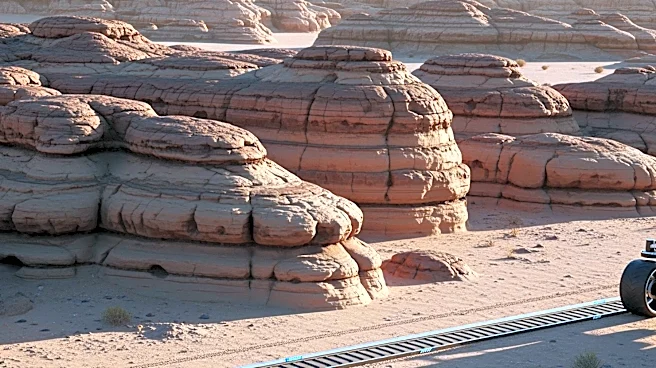
NASA's Curiosity rover is currently navigating towards the Yardang unit, a series of wind-sculpted, pale-colored hills on Mars, as part of its ongoing scientific exploration. The rover, which operates in two primary modes—focused science campaigns and
exploratory drives—has recently completed a detailed study of a boxwork formation. Now, it is transitioning to a more exploratory phase as it moves towards its next major scientific target. The Yardang unit presents a unique geological landscape, characterized by laminated bedrock with varying colors and textures. The rover's instruments, including the Alpha Particle X-ray Spectrometer (APXS) and the ChemCam, are actively analyzing the rock formations encountered along the way. The Environmental Theme Group is also conducting environmental monitoring activities, such as dust devil tracking and atmospheric dust level assessments. This phase of the mission emphasizes the rover's role as a planetary explorer, capturing images and data from diverse geological features to enhance our understanding of Mars' history and environment.
Why It's Important?
The Curiosity rover's journey to the Yardang unit is significant for several reasons. Firstly, it continues to expand our understanding of Mars' geological history, particularly in terms of sedimentary processes and past environmental conditions. The data collected could provide insights into whether the region was once a desert, a lake, or a transitional environment. This information is crucial for reconstructing the planet's climatic history and assessing its potential for past habitability. Additionally, the mission supports NASA's broader goals of planetary exploration and the search for signs of life beyond Earth. The findings from Curiosity's analyses contribute to the scientific foundation necessary for future manned missions to Mars, as understanding the planet's surface and atmospheric conditions is essential for ensuring the safety and success of human explorers. Moreover, the mission exemplifies the technological advancements in robotic exploration, showcasing the capabilities of remote scientific investigation on another planet.
What's Next?
As Curiosity continues its journey towards the Yardang unit, the rover team will focus on detailed imaging and analysis of the geological features encountered. The upcoming weeks will involve further exploration of the contrasting dark and light bedrock areas, with the potential to uncover new insights into Mars' geological processes. The rover's instruments will continue to collect data on the composition and structure of the rocks, which will be analyzed to determine the environmental conditions that shaped them. The mission's progress will be closely monitored by scientists, who will use the findings to refine their understanding of Mars' history and guide future exploration efforts. Additionally, the environmental monitoring activities will provide valuable data on current Martian weather patterns, contributing to the planning of future missions. The scientific community and the public alike will be keenly observing the rover's discoveries, as they hold the promise of advancing our knowledge of the Red Planet.