




What's Happening?
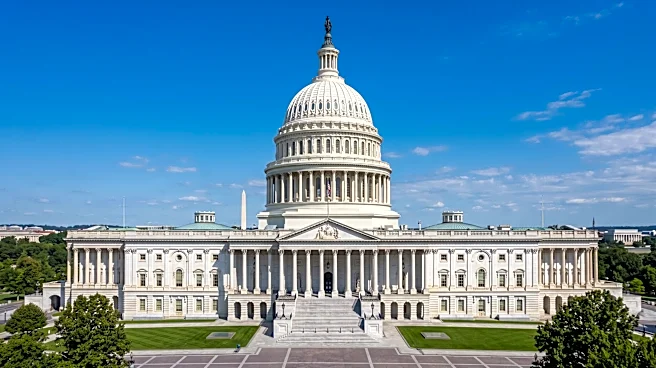
The Chamber of Progress, a center-left tech industry policy coalition, is advocating for the 2027 Democratic Congress to implement federal artificial intelligence (AI) safety standards. In a memo dated November 4, addressed to House and Senate Democratic leadership,
the coalition outlined ten priorities, with a primary focus on passing a federal AI transparency and safety standard. Koustubh KJ Bagchi, the group’s vice president of policy and government relations, emphasized the need for a national AI framework that incorporates public transparency, independent evaluation, and enforceable safeguards for advanced AI models. The memo suggests that Congress should mandate developers to publish safety frameworks, report critical incidents, and protect whistleblowers. It references the FRONTIER Act, introduced by Reps. Jay Obernolte, R-Calif., and Lori Trahan, D-Mass., in July, as a potential foundation for legislation aimed at governing the development and deployment of advanced AI models. The coalition also proposed a body similar to the Financial Industry Regulatory Authority (FINRA) to oversee AI, combining industry funding with federal supervision.
Why It's Important?
The call for federal AI safety standards by the Chamber of Progress highlights a growing concern within the tech policy sphere regarding the rapid advancement and deployment of artificial intelligence. Establishing a national framework could significantly impact the U.S. technology industry by creating a standardized regulatory environment, potentially reducing the complexity of navigating varied state-level regulations. This move could also influence public trust in AI technologies, as transparency and safety measures are designed to protect consumers and ensure ethical development. For AI developers, these standards could introduce new compliance costs and operational requirements, while also providing clearer guidelines for innovation. The emphasis on whistleblower protection and critical incident reporting aims to foster accountability and mitigate potential risks associated with powerful AI models. The proposed FINRA-like body suggests a model for AI oversight that blends industry expertise with governmental supervision, which could set a precedent for regulating emerging technologies.
What's Next?
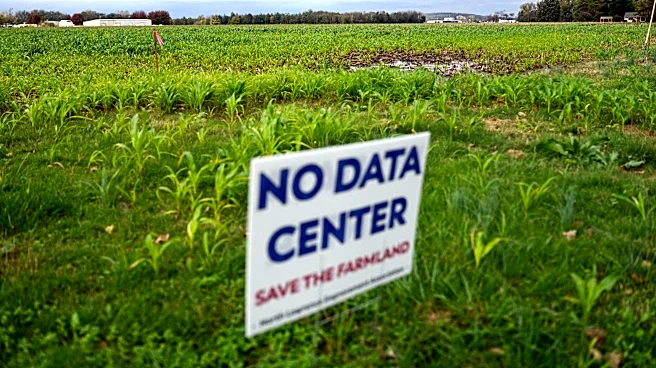
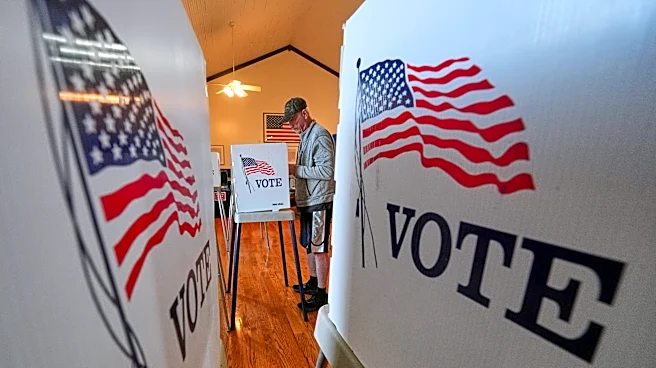
Following the recent midterm election results, several Democrats have indicated their intention to prioritize AI safety when they assume the majority in January. Rep. Yassamin Ansari, D-Ariz., has called for a pause on advanced AI development and regulation of the industry, while Congressional Progressive Caucus Chair Greg Casar, D-Texas, has urged Democrats to make AI a top priority, viewing it as a significant factor in American politics. The Chamber of Progress's memo is likely to serve as a blueprint for legislative discussions in the upcoming congressional session. The FRONTIER Act, co-sponsored by Reps. Jay Obernolte and Lori Trahan, is expected to be a key piece of legislation that Congress may build upon. Future actions could include congressional hearings, drafting of new bills, and debates over the scope and enforcement mechanisms of federal AI regulations. The public's interest in AI and data centers, as indicated by an NBC News exit poll where 56% of voters considered it a crucial or major factor in their vote, suggests that this issue will remain prominent on the legislative agenda.
Beyond the Headlines
The push for federal AI safety standards extends beyond immediate regulatory concerns, touching upon deeper ethical and societal implications. The debate over AI regulation involves balancing innovation with risk mitigation, and the proposed framework aims to address potential harms such as bias, privacy violations, and misuse of advanced AI. The idea of a FINRA-like body for AI oversight suggests a model of self-regulation combined with government supervision, which could raise questions about the independence and effectiveness of such a hybrid approach. Furthermore, the discussion around AI's impact on American politics, as noted by Rep. Casar, points to the technology's potential to reshape democratic processes and societal structures. The protection of whistleblowers in AI development is crucial for ensuring internal accountability and bringing potential ethical breaches to light. This broader conversation about AI governance will likely shape the future of technological development, influencing how AI is integrated into various sectors and its role in society.