






What's Happening?
Parents and students across the United States are facing new challenges in deciding on college commitments due to the rapid advancement of artificial intelligence (AI) and its impact on the job market. As the deadline for college decisions approaches,
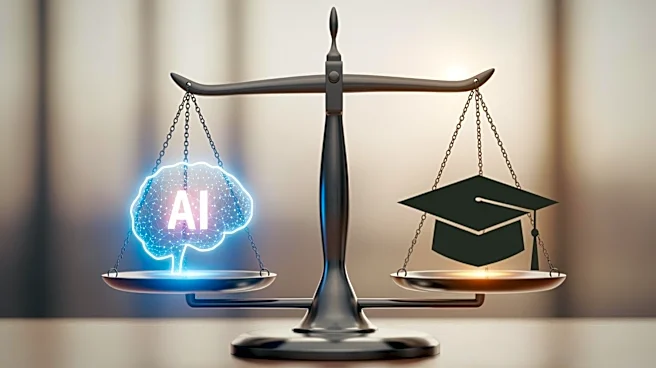
families are grappling with the uncertainty of how AI might affect future employment opportunities for graduates. The average student loan debt at graduation has increased significantly, and tuition fees continue to rise, adding to the financial burden. Parents are increasingly cautious about investing in degrees that may not guarantee stable employment, with some opting for majors perceived as less vulnerable to AI disruption. The evolving landscape has led to a shift in focus towards STEM fields and alternative education paths, such as trade programs and community colleges, which are seen as more 'AI-proof.'
Why It's Important?
The influence of AI on the job market is reshaping how families approach higher education, potentially altering the traditional value of a college degree. As AI continues to evolve, it may redefine the skills and qualifications needed for various careers, impacting the return on investment for certain majors. This shift could lead to changes in enrollment patterns, with more students pursuing fields perceived as less susceptible to automation. The financial implications are significant, as families weigh the cost of education against the potential for future earnings. The uncertainty surrounding AI's impact on employment may also drive changes in educational policy and funding, as institutions adapt to meet the demands of a changing workforce.
What's Next?
As AI technology progresses, educational institutions may need to revise curricula to better align with emerging job market needs. This could involve increased emphasis on interdisciplinary studies that combine technology with other fields. Policymakers might also consider adjustments to student loan programs and financial aid to address the growing concerns about debt and employment prospects. Additionally, ongoing discussions about the role of AI in education and employment could lead to new strategies for career counseling and job placement services, helping students navigate the complexities of the modern labor market.