






What's Happening?
The United Nations Educational, Scientific and Cultural Organization (UNESCO) conducted a regional seminar in Montevideo on October 6-7, 2026. The seminar focused on developing strategies to prevent the illicit trafficking of cultural property. A key
component of the event was a comparative study that analyzed trends and restitution processes in Latin America and the Caribbean between 2015 and 2023. This study serves as a benchmark for evaluating historical progress in the return of cultural assets. The seminar aimed to enhance institutional capacity and legal cooperation among member nations to improve the detection and investigation of cultural heritage theft and illegal trade.
Why It's Important?
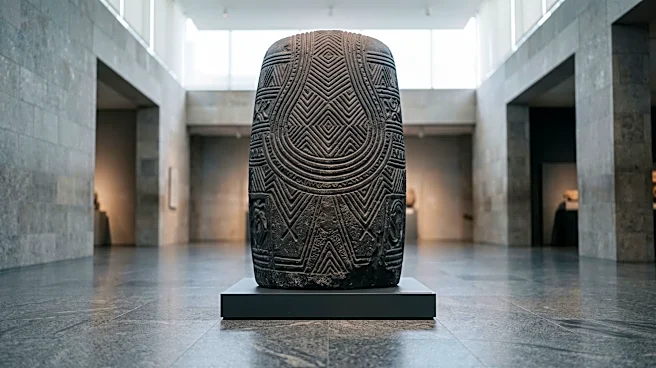
The illicit trafficking of cultural property is a global issue that deprives nations of their heritage, fuels organized crime, and undermines historical and cultural identities. For the U.S., this issue is important due to its commitment to international law and cultural preservation, as well as its role as a potential market or transit point for illicit artifacts. Strengthening international cooperation, as promoted by this UNESCO seminar, helps to create a more robust global framework for combating this trade. Improved detection and investigative capabilities in Latin America and the Caribbean can reduce the flow of stolen artifacts, potentially preventing them from reaching U.S. markets and supporting U.S. efforts to repatriate cultural items. This initiative also aligns with broader U.S. foreign policy goals of promoting stability and rule of law.
What's Next?
The seminar's outcomes are expected to bolster institutional capacity and legal cooperation, leading to more harmonized regional frameworks for protecting cultural heritage. Participants worked within the framework of MERCOSUR Cultural 2026 to solidify cooperation mechanisms. The presented study, covering 2015-2023, will serve as a benchmark for future evaluations of progress in returning cultural assets. Ongoing initiatives under the MERCOSUR Cultural 2026 framework will continue to stabilize the legal landscape for returning stolen artifacts to their nations of origin. Stakeholders are encouraged to align national laws to ensure consistent recovery processes across borders, with further progress to be tracked through cultural preservation initiatives.
Beyond the Headlines
Beyond the immediate goal of combating illicit trafficking, this UNESCO seminar highlights the intrinsic value placed on cultural heritage as a shared global resource. The focus on restitution processes and harmonizing legal frameworks reflects a growing international consensus that cultural artifacts are not mere commodities but integral parts of a nation's identity and history. The seminar's emphasis on training law enforcement and heritage officials underscores the complex interplay between cultural preservation, legal enforcement, and international diplomacy. This collaborative approach sets a precedent for addressing other transnational challenges that require coordinated efforts and a deep understanding of diverse legal and cultural contexts.