




What's Happening?
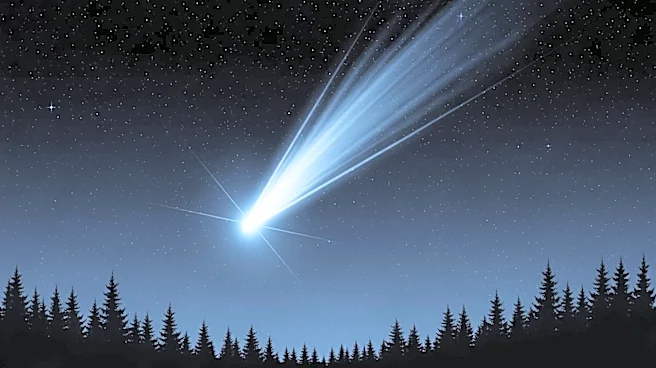
Comet C/2025 R3, discovered by Pan-STARRS telescopes in Hawaii, is set to become visible in the Northern Hemisphere this month. The comet, a cosmic snowball of frozen gases, rock, and dust, will reach its closest point to the Sun on April 19-20 and its closest approach
to Earth on April 25-27. During this period, it may be visible to the naked eye, although its brightness remains uncertain. The comet's visibility will peak in the predawn sky, offering a potential celestial spectacle for sky watchers.
Why It's Important?
The appearance of Comet C/2025 R3 provides a unique opportunity for both amateur and professional astronomers to observe and study a celestial event. Such events can enhance public interest in astronomy and space science, fostering educational opportunities and inspiring future scientific endeavors. Additionally, studying comets can offer insights into the early solar system's conditions and the processes that shaped planetary formation.
What's Next?
Sky watchers are advised to use binoculars or telescopes for optimal viewing of Comet C/2025 R3, especially in dark areas away from city lights. The comet's visibility will coincide with other celestial events, such as the Lyrid and Eta Aquariid meteor showers, providing multiple opportunities for astronomical observation. Continued monitoring of the comet's trajectory and brightness will help refine predictions and enhance understanding of its behavior.