
What's Happening?
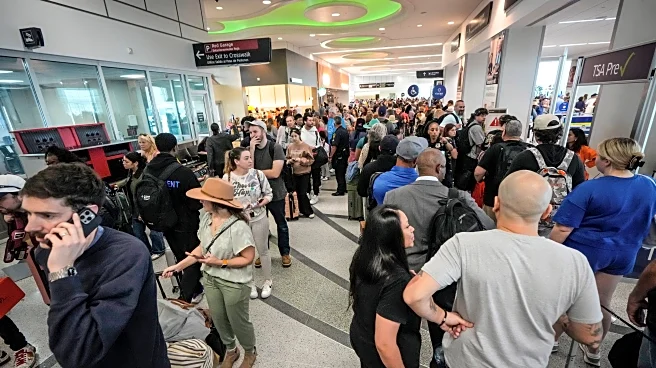
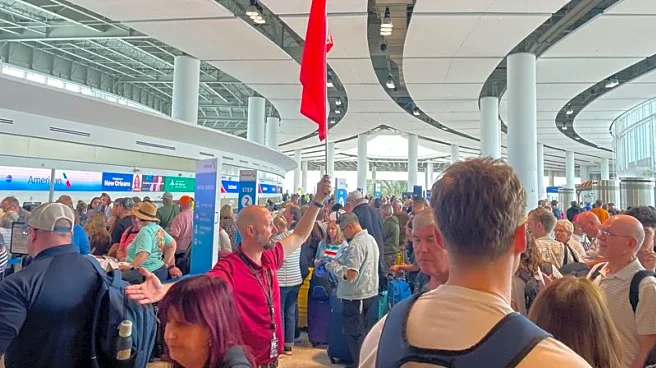
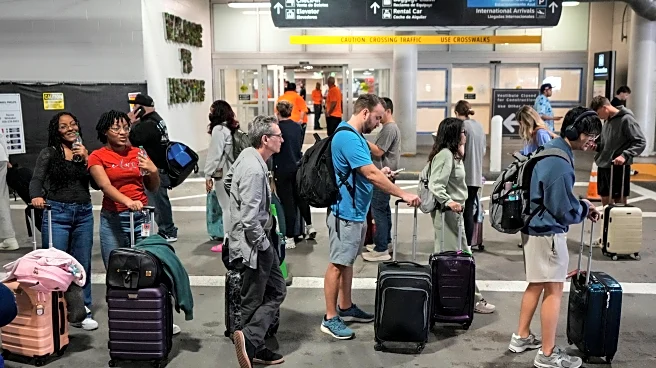
The ongoing government shutdown has reignited discussions about the potential privatization of the Transportation Security Administration (TSA) operations. As travelers face long security lines at airports, the aviation industry is considering whether
private contractors could provide a more stable solution during such political impasses. Currently, some airports, like San Francisco International Airport (SFO), use private contractors for security screenings under TSA oversight, which has helped maintain operations during previous shutdowns. This model is being examined as a potential way to mitigate disruptions caused by government funding lapses. However, the idea of privatization is met with resistance from the union representing federal screeners, which argues that it could lead to reduced job protections and benefits.
Why It's Important?
The debate over TSA privatization is significant as it touches on the broader issue of how essential services are managed during government shutdowns. Privatizing TSA operations could potentially shield airport security from political disruptions, ensuring smoother travel experiences for passengers. This is particularly crucial during peak travel seasons, such as spring break, when disruptions can have widespread effects on the travel industry and economy. However, the move could also impact TSA employees, who may face changes in job security and benefits. The discussion reflects ongoing tensions between maintaining federal oversight and exploring private sector efficiencies in public services.
What's Next?
As the debate continues, stakeholders, including Congress, the aviation industry, and TSA leadership, will need to weigh the benefits and drawbacks of privatization. Legislative proposals, such as the 'Abolish TSA Act,' which aims to phase out the agency in favor of private contractors, may gain traction. Meanwhile, industry groups are advocating for legislation to ensure aviation workers are paid during shutdowns, which could provide an alternative solution to privatization. The outcome of these discussions could reshape how airport security is managed in the U.S., with potential implications for both travelers and TSA employees.