

What's Happening?
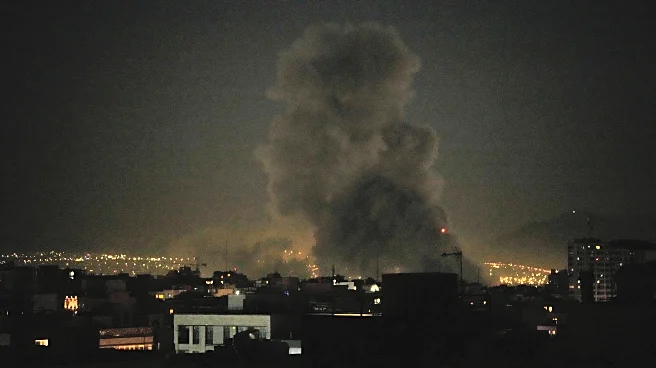
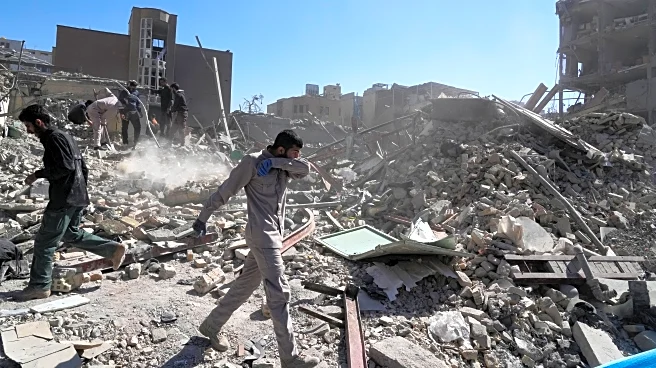
Amid ongoing conflict, dark humor has emerged as a form of resistance among Iranians. The use of jokes highlights the population's resilience and defiance against the oppressive regime. Recent military actions by the United States and Israel, including
the reported killing of 48 regime leaders, have intensified the situation. Despite the dire circumstances, humor serves as a coping mechanism and a subtle form of protest against the regime's control.
Why It's Important?
The use of humor in oppressive environments underscores the human capacity for resilience and resistance. It highlights the role of cultural expression in challenging authoritarian regimes and maintaining hope. The situation in Iran reflects broader themes of resistance and defiance in the face of adversity, resonating with historical examples of humor as a tool for social change. The international community's response to the conflict may be influenced by the narratives emerging from within Iran.
What's Next?
As the conflict continues, the use of humor may persist as a form of resistance, potentially inspiring similar movements in other oppressive contexts. The international community may take note of the cultural expressions emerging from Iran, influencing diplomatic and humanitarian responses. The ongoing situation may prompt discussions about the role of cultural expression in conflict zones and the ways in which humor can serve as a catalyst for change.
Beyond the Headlines
The situation highlights the power of cultural expression in challenging oppressive regimes and the potential for humor to serve as a form of protest. It raises questions about the role of art and culture in political resistance and the ways in which humor can transcend boundaries to inspire change. The use of humor in Iran reflects broader themes of resilience and defiance, resonating with historical examples of cultural resistance.