

What's Happening?
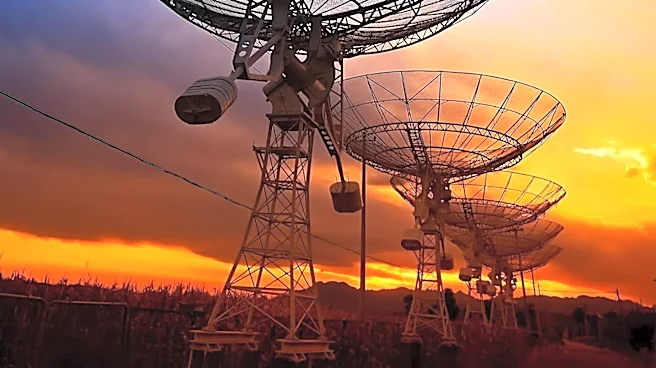
Recent observations have revealed the staggering scale of IC 1101, the largest known galaxy in the universe. Led by Carlos Marrero-de la Rosa from the Astrophysical Institute of the Canary Islands, the study utilized ultra-deep images from the Isaac Newton
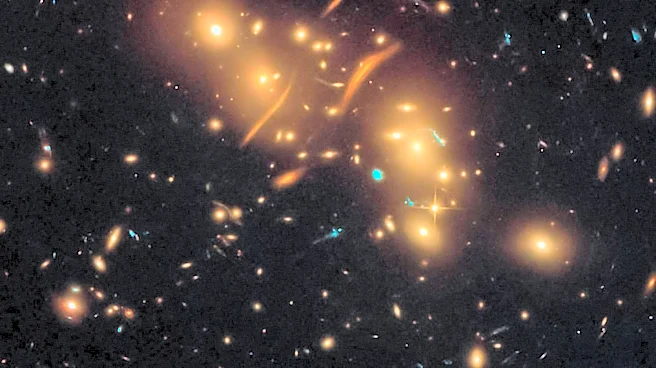
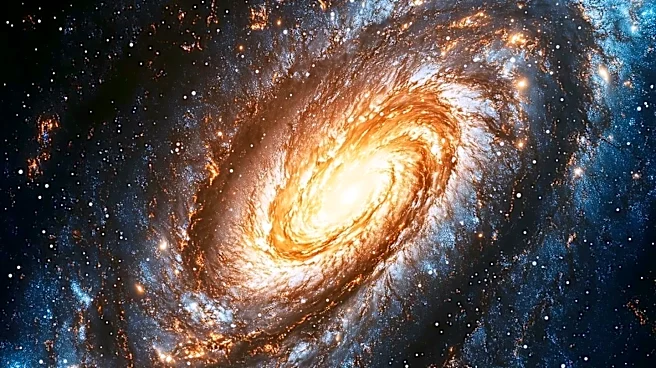
Telescope to explore the galaxy's diffuse outer boundaries. IC 1101, located at the center of the Abell 2029 galaxy cluster, contains an estimated 3.4 trillion solar masses of stars and spans approximately 1.7 million light-years. This makes it significantly larger than any other known galaxy. The research highlights the challenges of studying such massive galaxies, which often blend into the cosmic background due to their faint outer regions.
Why It's Important?
The discovery of IC 1101's true scale provides valuable insights into the formation and evolution of the universe's largest structures. As a brightest cluster galaxy, IC 1101 has grown by absorbing smaller galaxies over billions of years, offering a glimpse into the processes that shape galaxy clusters. Understanding these processes can enhance our knowledge of cosmic evolution and the role of dark matter in galaxy formation. The study also addresses the challenges posed by light pollution from both artificial sources and foreground stars, emphasizing the need for advanced observational techniques in astronomy.