








What's Happening?
Nexalin Technology, Inc. has announced the publication of a peer-reviewed study in BMC Psychiatry, highlighting the effectiveness of its Deep Intracranial Frequency Stimulation (DIFS) technology. The study focused on female adolescents with non-suicidal
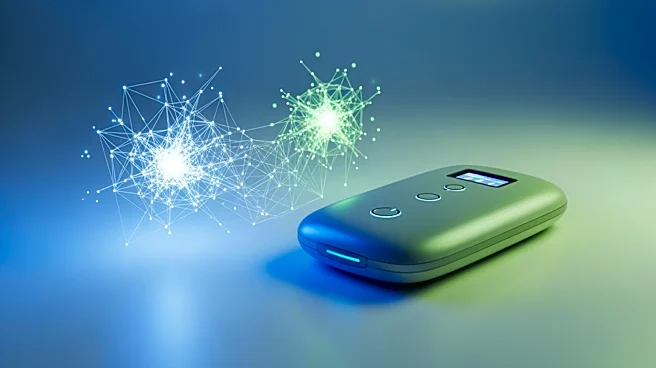
self-injury (NSSI) and reported statistically significant reductions in self-injury behaviors and depressive symptoms. The research involved six patients who underwent 21 days of 77.5 Hz, 15 mA stimulation using Nexalin's device. The findings indicated changes in brain-network activity and connectivity, particularly in emotional-control networks such as Default, Limbic, Salience/Ventral Attention, and Control networks. Improvements in anxiety and sleep quality were also noted, with no significant adverse effects reported, except for one mild headache that resolved quickly.
Why It's Important?
The study's findings are significant as they offer preliminary evidence supporting the potential of Nexalin's non-invasive, high-power DIFS technology in treating mental health issues without medication. This is particularly relevant in a market increasingly seeking safer, drug-free alternatives for mental health treatment. The technology's ability to penetrate deeper into the brain supports higher efficacy and enhanced treatment outcomes, which could be crucial for treatment-resistant populations. Nexalin's approach could broaden its relevance across multiple indications, potentially transforming mental health treatment practices and improving patient outcomes.
What's Next?
Nexalin plans to further investigate its technology through larger randomized controlled trials to validate these preliminary findings. The company has also launched its AI-designed virtual clinic platform, NeuroCare, in collaboration with the University of California, San Diego. This platform aims to increase patient access, reduce costs, and provide long-term physician-patient care and monitoring across critical brain-health indications. Nexalin's continued research and development efforts could lead to wider adoption of its technology in clinical settings, offering new hope for patients with mental health challenges.