







What's Happening?
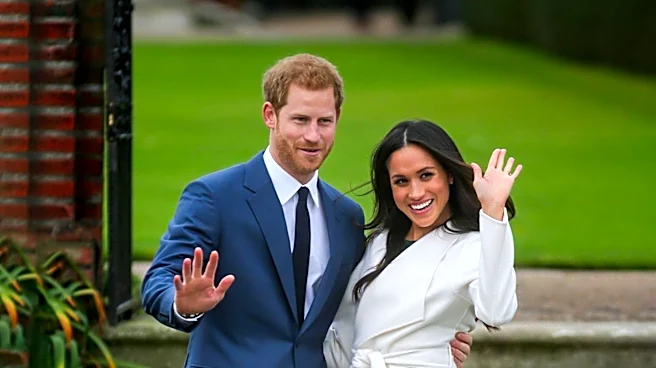
Prince Harry and Meghan Markle, Duke and Duchess of Sussex, have embarked on a journey from their roles as senior working royals to establishing an independent life in Montecito, California. Their decision to step back from royal duties was driven by
intense media pressure and a perceived lack of institutional support, which took a significant toll on their mental well-being. Prince Harry, born into the British royal family, experienced profound grief after his mother Princess Diana's death, leading to a lifelong struggle with media scrutiny. Meghan Markle, an American actress and activist, built her career from scratch before marrying into the monarchy. Their blind date in London led to a romance that culminated in a globally televised wedding in Windsor. However, life within the royal family proved challenging for Meghan, who reported feeling isolated and overwhelmed by expectations and relentless tabloid attacks. Prince Harry, witnessing his wife's struggles, feared a repeat of his mother's fate. This led to their decision to step back, giving up royal titles, public funding, and formal roles to seek privacy and safety for their family, including their children, Archie and Lilibet. They have since launched the Archewell Foundation, focusing on mental health, community support, and disaster relief, and have secured production deals with platforms like Netflix to create content reflecting their values.
Why It's Important?
The narrative of Prince Harry and Meghan Markle's departure from royal life and their subsequent establishment of independent ventures is profoundly important for several reasons. It highlights the immense pressures faced by individuals within traditional institutions, particularly those under constant public and media scrutiny. Their decision to prioritize mental health and family well-being over royal duties has sparked global conversations about the human cost of public life and the need for personal autonomy. Their transition to California and their focus on philanthropic and creative projects demonstrate a modern approach to leveraging celebrity for social impact, influencing how public figures can maintain relevance and purpose outside conventional roles. Furthermore, their story has brought critical attention to issues of media ethics, racial bias in reporting, and the challenges of integrating diverse backgrounds into established hierarchies. Their journey serves as a case study for understanding evolving societal values regarding tradition, personal freedom, and the pursuit of happiness in the face of extraordinary circumstances.
What's Next?
Prince Harry and Meghan Markle are expected to continue building their Archewell Foundation and expanding their creative ventures, including documentaries, films, and original series through their production deals. Prince Harry remains deeply involved with the Invictus Games, while Meghan focuses on lifestyle branding, content creation, and advocacy for women and families. They will likely continue to use their platform to speak about mental health, racial justice, and kindness. Their relationship with the British royal family remains complex, with ongoing efforts towards reconciliation and periods of distance. Future interactions and public statements from either side will be closely watched for signs of healing or further strain. The couple will also continue to navigate the challenges of raising their children, Archie and Lilibet, in a private and grounded environment away from the intense media spotlight they experienced in the UK. Their long-term success will depend on their ability to consistently deliver impactful projects and maintain public support for their independent endeavors.
Beyond the Headlines
The story of Prince Harry and Meghan Markle transcends a mere celebrity narrative; it delves into deeper societal and cultural shifts. It challenges the traditional notions of monarchy and public service, prompting a re-evaluation of the roles and responsibilities of royal families in the modern world. Their experience highlights the ethical dilemmas of media intrusion and the psychological toll it can take on individuals, particularly those without the full protection of an institution. The couple's emphasis on mental health and their willingness to speak openly about their struggles have contributed to destigmatizing these issues globally. Moreover, Meghan Markle's biracial heritage and the subsequent media treatment have ignited important discussions about race, identity, and representation within historically white institutions. Their journey represents a powerful assertion of individual agency against centuries of tradition, offering a compelling example of how personal choices can catalyze broader societal reflection and change.