
What's Happening?
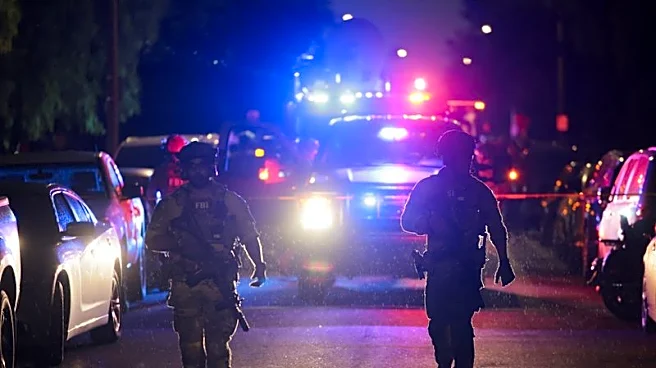
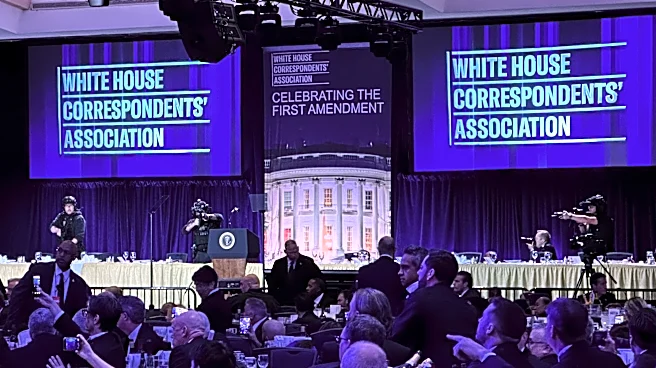
A recent security breach at the White House Correspondents’ Dinner has raised concerns about the safety of large-scale events in the United States. During the event, a heavily armed individual managed
to access areas near the ballroom, prompting a swift evacuation of President Trump and senior officials. This incident has sparked a debate on the effectiveness of current security measures at high-profile gatherings. The breach occurred despite electronic scanning at the ballroom entrance, highlighting vulnerabilities in the surrounding areas accessible to the public. The event has prompted White House Chief of Staff Susie Wiles to convene a meeting with officials to discuss future security strategies for events attended by the president. The upcoming 250th anniversary of America’s founding and the World Cup, both set to attract large audiences, are under scrutiny for their security preparedness.
Why It's Important?
The security breach at the White House Correspondents’ Dinner underscores the challenges of ensuring safety at major events, especially those involving high-profile figures. With the United States set to host significant events like the World Cup and the 250th anniversary celebrations, the need for robust security measures is paramount. These events not only attract large crowds but also pose potential targets for various threats, including terrorism and political violence. The incident highlights the delicate balance between maintaining security and preserving the essence of public gatherings, which are integral to democratic expression and cultural celebration. The breach serves as a wake-up call for event organizers to reassess and enhance their security protocols to prevent similar incidents in the future.
What's Next?
In response to the security breach, discussions are underway to potentially relocate future White House Correspondents’ Dinners to more secure venues, such as convention centers with restricted access. Additionally, there is a push to recalibrate security measures for upcoming events like the World Cup and the 250th anniversary celebrations. Organizers are expected to strengthen law enforcement defenses while ensuring that the events remain open and meaningful. The incident may also lead to increased collaboration between federal, state, and local agencies to develop comprehensive security plans that address both hard and soft target vulnerabilities. As these discussions progress, the focus will be on creating a secure environment without compromising the spirit of the events.