

What's Happening?
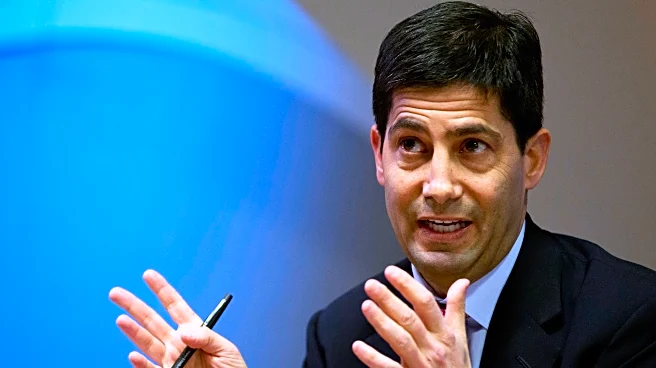
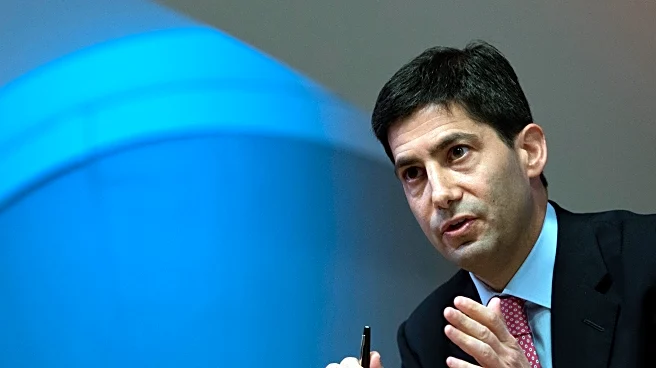
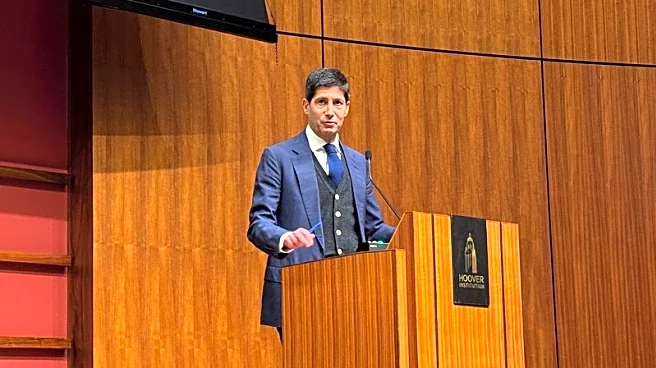
President Trump has nominated Kevin Warsh to succeed Jerome Powell as the Chair of the Federal Reserve. This decision concludes a five-month period of uncertainty surrounding the leadership of the central bank. Warsh, a former Federal Reserve governor,
is set to take over in May. The nomination has also brought attention to Warsh's wife, Jane Lauder, a billionaire heiress and influential business leader. Lauder, the granddaughter of Estée Lauder, has a significant net worth of approximately USD 2.7 billion. She has held various leadership roles within the Estée Lauder Companies, contributing to its digital transformation. Lauder's prominence in the business world adds an interesting dimension to the discussions about Warsh's potential impact on U.S. monetary policy.
Why It's Important?
The nomination of Kevin Warsh as Federal Reserve Chair is significant as it marks a potential shift in U.S. monetary policy under President Trump's administration. Warsh's leadership could influence interest rates and economic strategies at a time when the Federal Reserve is under intense scrutiny. The attention on Jane Lauder highlights the intersection of business influence and public policy, as her family's substantial wealth and business acumen could indirectly impact perceptions of Warsh's role. This development underscores the broader implications of personal and professional networks in shaping economic policy decisions.
What's Next?
As Kevin Warsh prepares to assume the role of Federal Reserve Chair, stakeholders will closely monitor his policy directions and decisions. The financial markets, businesses, and policymakers will be particularly attentive to any changes in interest rates or economic strategies. Additionally, Jane Lauder's continued influence in the business sector may draw further public and media interest, potentially affecting the narrative around Warsh's tenure. The Federal Reserve's actions under Warsh's leadership will be pivotal in navigating economic challenges and opportunities in the coming years.
Beyond the Headlines
The nomination of Kevin Warsh and the spotlight on Jane Lauder highlight the complex interplay between economic policy and business influence. This development raises questions about the role of wealth and corporate leadership in shaping public policy. It also reflects broader societal discussions about the concentration of economic power and its implications for governance and democracy. As the Federal Reserve plays a critical role in the U.S. economy, the personal and professional backgrounds of its leaders can have far-reaching effects on public trust and policy outcomes.