
What's Happening?
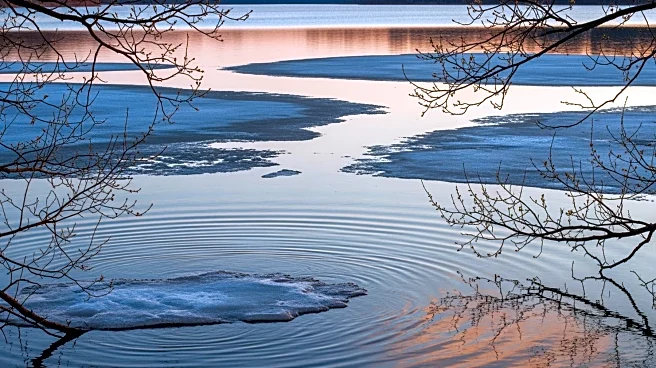
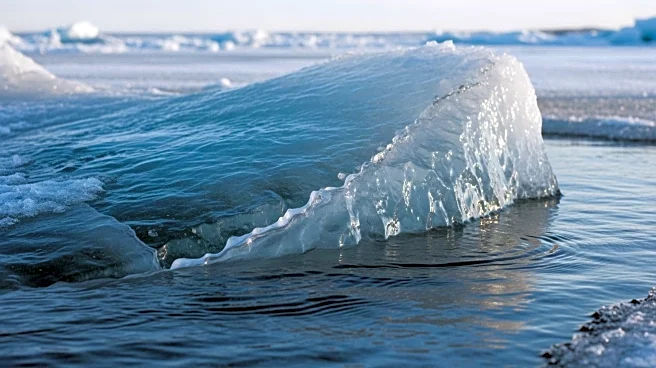
The polar regions of Earth, comprising the Arctic and Antarctic, play crucial roles in global climate dynamics. The Arctic, an ocean surrounded by land, experiences significant seasonal changes in sea ice extent, which impacts global climate patterns
through processes like ice albedo feedback. The Greenland ice sheet, a major component of the Arctic system, contributes to sea level rise and influences ocean circulation. In contrast, Antarctica, a continent surrounded by ocean, is characterized by thick ice sheets and significant seasonal variability in sea ice extent. The Antarctic Peninsula has experienced strong warming trends, affecting local ecosystems. Both regions are home to unique wildlife adapted to extreme conditions, and international cooperation is coordinated through bodies like the Arctic Council.
Why It's Important?
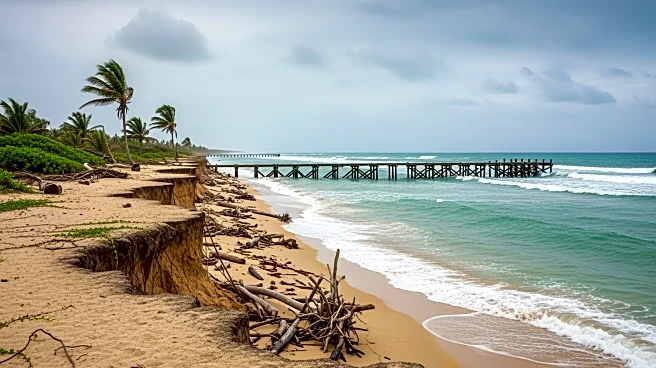
The polar regions are critical to understanding global climate change, as they are sensitive indicators of environmental shifts. The melting of ice sheets in these areas contributes to rising sea levels, which can have widespread impacts on coastal communities worldwide. The changes in sea ice extent and temperature in the Arctic and Antarctic influence global weather patterns and ocean currents, affecting ecosystems and human activities far beyond the polar regions. The international cooperation facilitated by organizations like the Arctic Council is essential for addressing the complex challenges posed by climate change, emphasizing the need for collaborative efforts in environmental protection and sustainable resource management.