





What's Happening?
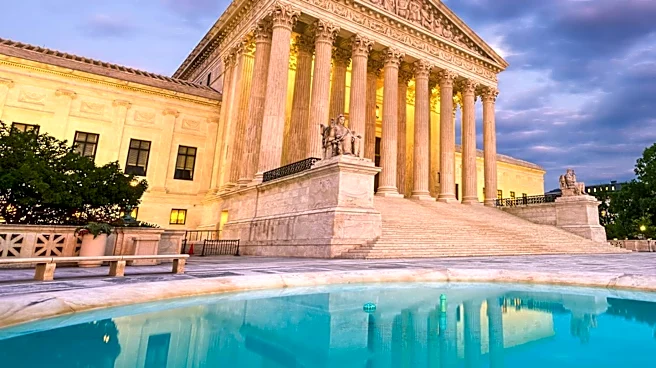
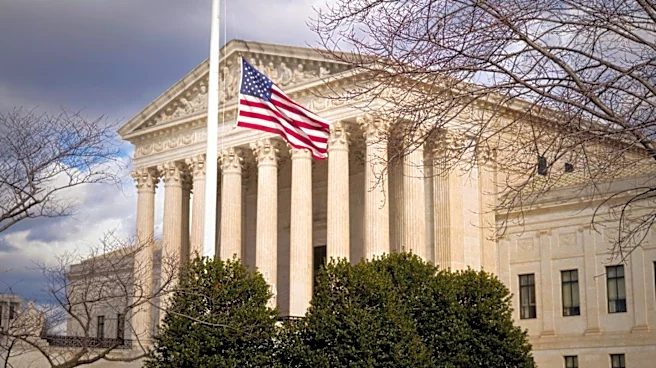
The Second Amendment's 'well regulated Militia' clause does not limit the right to bear arms solely to individuals serving in an organized militia, according to controlling Supreme Court precedent. The Supreme Court, in *District of Columbia v. Heller*,
established that the prefatory militia clause announces a purpose, while the operative clause protects an individual right to possess and carry arms for lawful purposes, including self-defense, unconnected with militia service. This ruling was later applied to the states through the Fourteenth Amendment in *McDonald v. City of Chicago*. The Court has clarified that while the militia clause explains a constitutional reason for protecting the people from disarmament, it does not make militia membership a prerequisite for exercising the right. The term 'well regulated' in 1791 referred to a militia made effective through discipline, training, organization, and law, not a justification for any modern firearm restriction.
Why It's Important?
This interpretation of the Second Amendment has profound implications for gun rights and regulations in the U.S. It affirms an individual's right to bear arms for self-defense, a cornerstone for many gun owners and advocacy groups. However, it also clarifies that this right is not unlimited, allowing for historically grounded regulations. The historical context, particularly the discriminatory disarmament faced by freedpeople after the Civil War, influenced the understanding of the Second Amendment as an equal-citizenship question, not just a militia-related one. This historical perspective, relied upon in *McDonald v. City of Chicago*, underscores the importance of the right to bear arms for personal security and liberty, especially for vulnerable populations. The ongoing legal framework, as developed in cases like *Bruen*, *Rahimi*, and *Wolford*, continues to shape how modern firearm restrictions are evaluated against the nation's historical tradition of firearm regulation, impacting legislative efforts and individual liberties across the country.
What's Next?
The Supreme Court's framework for evaluating firearm regulations, which requires consistency with the nation's historical tradition, will continue to be applied in future cases. This means that new or existing gun laws will be scrutinized based on historical analogues, rather than through means-end scrutiny. The ongoing legal challenges and decisions, such as *Wolford v. Lopez*, will further refine the boundaries of the Second Amendment right, particularly concerning public carry and restrictions on private property. Debates will persist regarding what constitutes a 'historically grounded' regulation and how to balance individual rights with public safety concerns. The distinction between constitutional entitlement and practical competence will also remain a key area of discussion, with some advocating for responsible gun ownership through training and education, even as the right itself is not contingent on such requirements. The evolution of these legal interpretations will continue to influence state and federal gun legislation and enforcement.
Beyond the Headlines
Beyond the legal interpretations, the Second Amendment's 'well regulated Militia' clause touches upon deeper societal questions about civic responsibility, public safety, and the role of an armed citizenry. The historical context reveals that the militia was drawn from a legally defined portion of the people, and founding laws regulated equipment and service in detail. This suggests a historical understanding where the right to bear arms was intertwined with a sense of collective duty and regulated participation. While modern interpretations affirm an individual right, the historical emphasis on a 'well regulated' force implies a connection between rights and responsibilities. This can foster a culture of responsible gun ownership, where competence, judgment, and restraint are valued. The ongoing tension between individual liberty and collective security, as reflected in the Second Amendment's dual clauses, continues to shape American identity and its approach to firearms, prompting ongoing dialogue about the balance between rights and the common good.