



What's Happening?
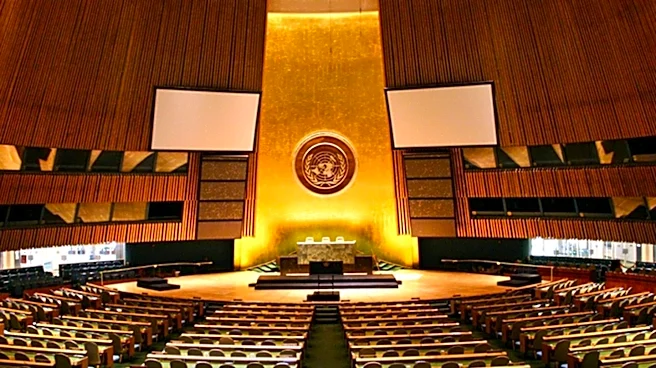
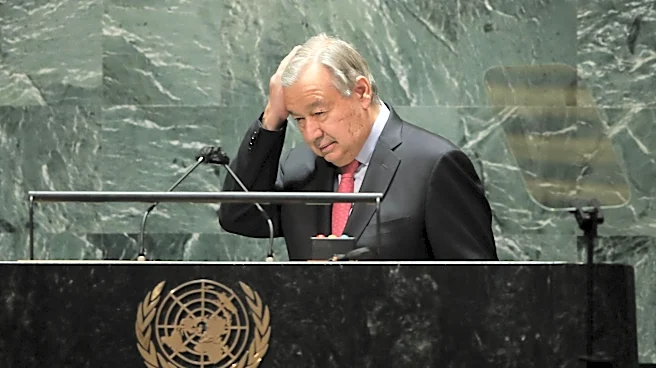
The United Nations Charter, established after World War II, provides foundational principles that implicitly guide modern international refugee and human rights law, impacting U.S. immigration and asylum policies. While the Charter does not explicitly
regulate migration, its core tenets—respect for human dignity without discrimination, cooperation in solving humanitarian problems, and the promotion of peace, justice, and human rights—are seen as critical. These commitments translate into obligations for member states, including the protection of refugees and asylum seekers, adherence to the principle of non-refoulement (not returning individuals to danger), burden-sharing among nations, and addressing the root causes of displacement. The U.S., as an immigrant nation, finds its constitutional values and historical migration patterns intersecting with these international principles, suggesting that migration is not merely a domestic issue but an international moral responsibility. The inherent dignity of all humans, regardless of citizenship or legal status, is a central theme, influencing how the U.S. approaches its role in global migration.
Why It's Important?
The integration of UN Charter principles into the discourse on U.S. immigration and asylum highlights a critical moral and legal framework that shapes national policy. For the U.S., a nation historically built on immigration, these principles underscore the ethical dimensions of its border control and humanitarian efforts. Adherence to these international standards can bolster the U.S.'s standing as a global leader in human rights, while any perceived deviation could undermine its legitimacy on the international stage. Economically, managing migration in line with these principles can influence labor markets, social services, and international aid commitments. Socially, it impacts how immigrant communities are integrated and protected, reflecting on the nation's commitment to diversity and human dignity. The debate over 'irregular immigration' becomes more complex when viewed through this lens, as it necessitates balancing national sovereignty with the moral imperative to protect vulnerable populations fleeing violence or instability. The U.S.'s approach to asylum, though statutory, is seen as reflecting constitutional ideals of due process and protection from persecution, making its policies a 'moral mirror of national character.'
What's Next?
Future U.S. immigration and asylum policies will likely continue to be scrutinized against the backdrop of UN Charter principles and international human rights law. Discussions will focus on how to balance national security and border control with humanitarian obligations, particularly concerning refugees and asylum seekers. There may be increased pressure from international bodies and civil society groups for the U.S. to enhance its protection mechanisms, ensure fair legal processes, and address the root causes of displacement through foreign policy and aid. The ongoing challenge of 'irregular immigration' will require a nuanced approach that distinguishes between criminal intent and desperate necessity, potentially leading to reforms in legal pathways for migration and asylum. Furthermore, the U.S. will need to continue to acknowledge and address historical injustices towards Indigenous peoples, which complicates claims of absolute belonging by later immigrant groups, fostering a more humble and inclusive approach to immigration debates.
Beyond the Headlines
The deeper implications of the UN Charter's influence on U.S. immigration extend to the very definition of national identity and moral responsibility. The concept of 'human brotherhood' embedded in the Charter, which views humanity as a shared community, challenges purely nationalistic approaches to migration. This perspective suggests that migrants are not external threats but vulnerable members of a global community, whose protection is essential for the legitimacy of the international order. Ethically, the U.S. faces a continuous test of its values, as its treatment of migrants and asylum seekers reflects its commitment to human dignity and justice. Legally, the interplay between international law, constitutional principles, and statutory regulations creates a complex framework that demands constant re-evaluation to ensure that law serves justice. Culturally, the ongoing waves of migration continue to reshape American society, reinforcing the idea that migration has historically strengthened the nation, even amidst initial resistance. The long-term shift could involve a more globally integrated approach to migration governance, where sovereignty is increasingly balanced by moral accountability and shared humanitarian responsibilities.