



What's Happening?
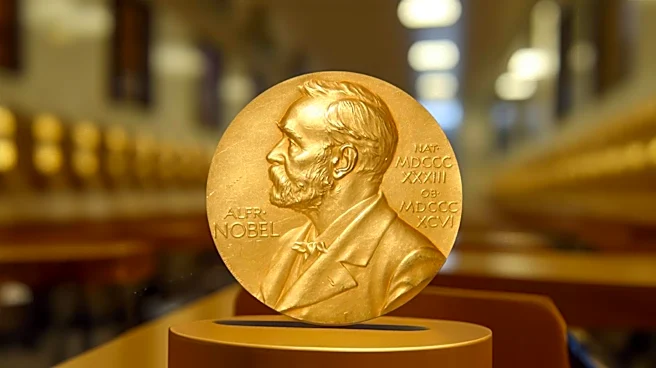
Jacob Tsimerman, a mathematician, has been awarded the 2026 Fields Medal for his work on the André-Oort conjecture. This prestigious recognition comes at a time when Tsimerman is voicing concerns about the future of mathematics in the face of rapid advancements
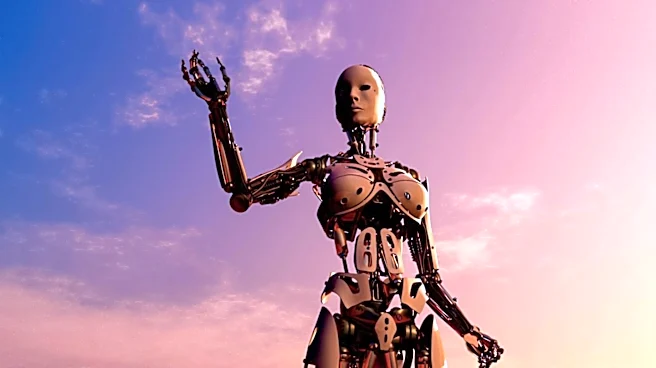
in artificial intelligence (AI). Tsimerman has expressed that AI could surpass human mathematicians in problem-solving within two years, which has influenced his decision to stop taking graduate students. He fears that traditional mathematical careers may become obsolete as AI continues to evolve. Tsimerman is now focusing on AI safety, believing that mathematicians have a role in ensuring AI systems behave as intended.
Why It's Important?
The awarding of the Fields Medal to Tsimerman highlights the ongoing debate about the role of AI in mathematics and other fields. As AI systems become more capable of solving complex problems, there is a growing concern about the future of human involvement in these areas. Tsimerman's shift in focus to AI safety underscores the importance of understanding and managing the implications of AI advancements. This development could impact educational institutions, research funding, and the job market for mathematicians, as the traditional pathways in mathematics may need to adapt to the changing landscape.
What's Next?
As AI continues to advance, the mathematics community may need to reassess its approach to research and education. Tsimerman's focus on AI safety suggests that there will be increased efforts to understand and mitigate the risks associated with AI systems. This could lead to new collaborations between mathematicians and AI researchers, as well as the development of new educational programs that integrate AI into mathematical studies. The broader implications for other fields reliant on problem-solving and analytical skills are also significant, as AI's capabilities continue to expand.
Beyond the Headlines
The rise of AI in mathematics raises ethical and philosophical questions about the nature of problem-solving and the value of human intuition in scientific discovery. As machines potentially outperform humans in certain tasks, there may be a shift in how society values different types of intellectual contributions. This could lead to a reevaluation of what it means to be a mathematician and how mathematical achievements are recognized and celebrated.