








What's Happening?
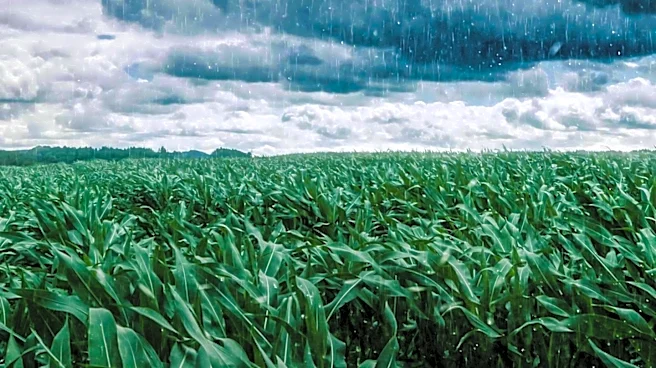
Across Ohio, agricultural operations are experiencing significant delays in harvest progress due to recent and ongoing rainfall. In Putnam County, Derek Niese reports that while tomato harvesting has been challenging due to mud, corn and soybeans are turning,
and late tar spot is appearing in many corn fields. Despite the presence of tar spot, Niese believes its impact on yields will be limited in most fields, though some earlier fields might see a slight reduction. Similarly, in Ross County, Greg Ramsey notes that soybean fields still show some green, and recent rain has further postponed harvest. Matt Hartong in Summit County also faced delays in corn silage cutting due to wet conditions, though initial yields appear promising. Miami County farmers, as reported by Melissa Clark, are also ready for harvest but are waiting for a break in the weather, with some corn fields experiencing wind damage from recent storms.
Why It's Important?
The widespread rain delays across Ohio have significant implications for the state's agricultural sector. Prolonged wet conditions can lead to several issues, including increased difficulty in operating heavy machinery, potential for mold and other diseases in mature crops, and a compressed harvest window, which can strain resources and labor. The emergence of tar spot in corn fields, even if currently deemed less aggressive, introduces an additional variable that farmers must monitor. While its immediate impact might be minimal, the presence of such diseases can necessitate additional management strategies in future growing seasons. The delays also affect the supply chain, potentially impacting the availability and pricing of agricultural commodities. For individual farmers, these delays can lead to financial stress due to increased operational costs and potential yield losses, affecting their livelihoods and the broader rural economy.
What's Next?
Farmers across Ohio are closely monitoring weather forecasts, hoping for a dry period to commence or resume harvesting activities. In Putnam County, Niese anticipates starting corn and soybean harvest after tomato operations conclude, which he estimates to be about four weeks away. Ross County farmers, according to Ramsey, are also waiting for fields to dry out before beginning their soybean harvest. In Summit County, Hartong's focus remains on completing corn silage harvest, which is expected to wrap up in about a week if weather permits, before moving on to grain harvest around mid-October. Miami County farmers are poised to begin harvest early next week, provided the weather cooperates. The immediate future hinges on weather patterns, with a collective hope for a dry fall to allow for efficient and timely crop collection.
Beyond the Headlines
The current harvest delays and disease observations in Ohio highlight the increasing vulnerability of agricultural systems to unpredictable weather patterns, a potential consequence of broader climate shifts. Farmers are constantly adapting to these challenges, but prolonged periods of adverse weather can push existing infrastructure and management practices to their limits. The mention of tar spot, even if not severely impactful this year, underscores the ongoing battle against crop diseases that can evolve and become more aggressive over time. This situation could accelerate the adoption of precision agriculture technologies, such as advanced weather forecasting and disease monitoring systems, to help farmers make more informed decisions. Furthermore, it emphasizes the importance of robust agricultural insurance programs and government support to mitigate financial risks for farmers facing such environmental uncertainties, ensuring food security and economic stability in agricultural regions.