





What's Happening?
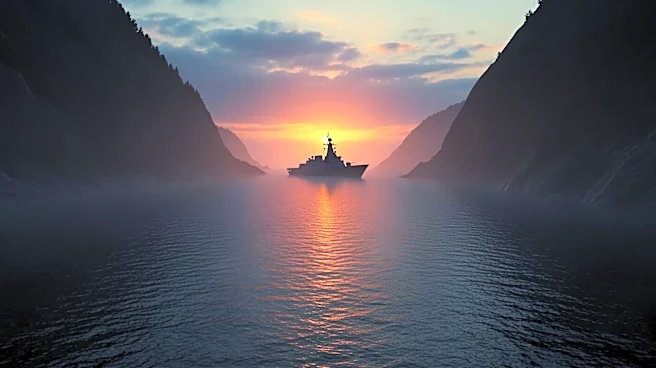
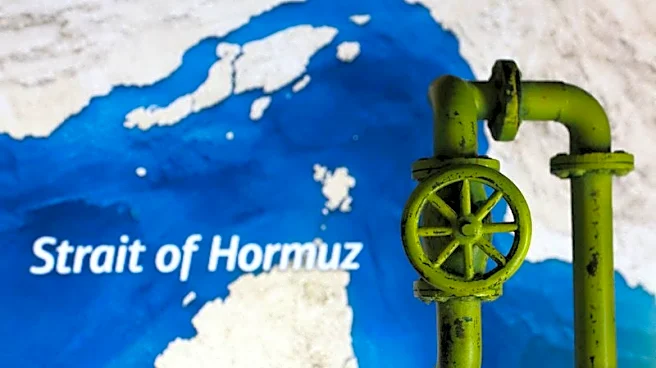
President Trump announced that the U.S. Navy would blockade the Strait of Hormuz, doubling the impact of the current Iranian closure. He accused Iran of 'world extortion' for its previous efforts to close the strait and pledged to follow suit with similar
measures. The U.S. Navy's posture appears to be changing to exert more control over the waterway, building up a surface warfare presence in and around the strait. The blockade would also have an impact on oil prices, already elevated due to the Iranian blockade.
Why It's Important?
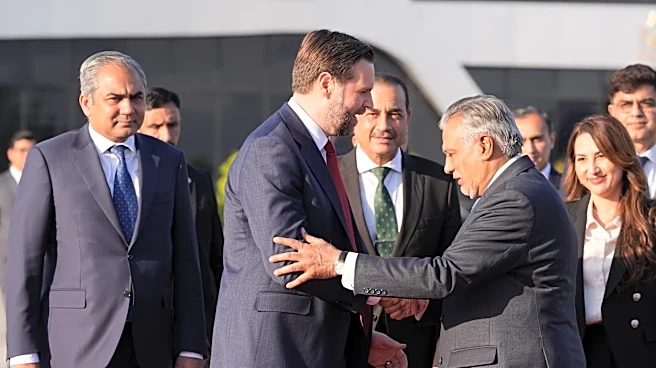
The proposed U.S. blockade of the strait would take one to two million more barrels per day off the global market, most of it bound for the Chinese market. Combined with the failure of high-level negotiations in Islamabad, it elevates the odds of a protracted closure of the strait, which could push expectations for low oil supply and higher oil prices further out into the rest of 2026, implying inflationary pressure and accelerated fuel rationing measures.
Beyond the Headlines
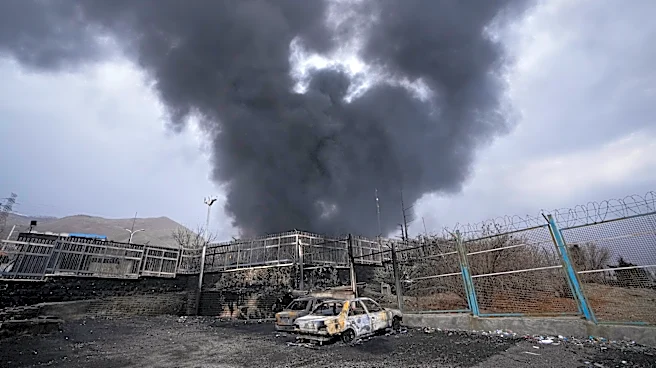
The blockade could prompt the Iranian regime to respond with escalation of its own. Iran retains an unknown number of mines, drones, and missiles, despite weeks of bombardment, and has shown that it still has capability to take action against vessels. The Islamic Revolutionary Guard Corps announced that any military vessel attempting to approach the strait would face a firm and severe response.