



What's Happening?
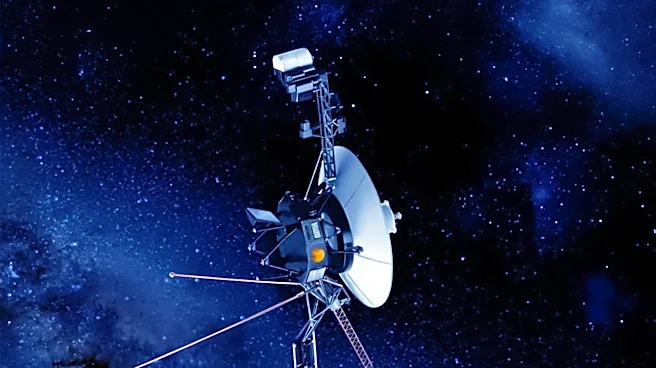
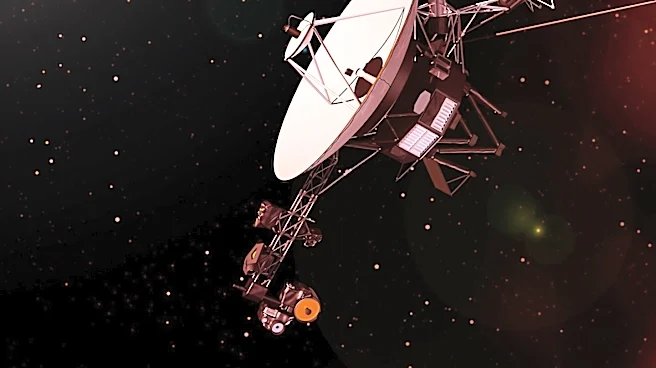
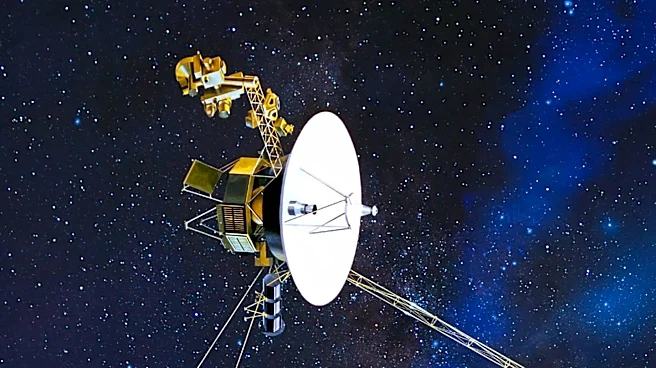
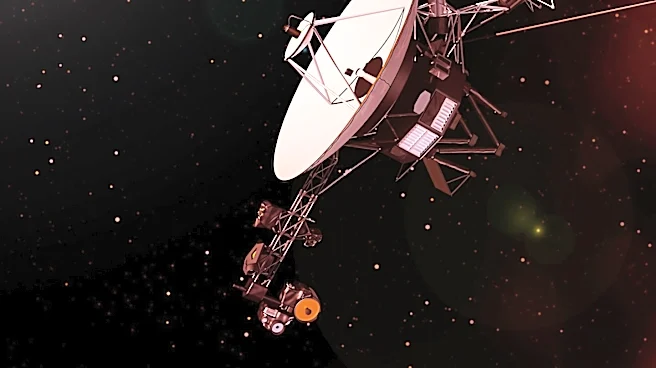
NASA has successfully extended the operational life of the Voyager 2 spacecraft, nearly 48 years after its launch. Engineers implemented a strategy known as the 'Big Bang,' which involves shutting down certain powered devices and replacing them with lower-power
alternatives to conserve energy. This approach allows Voyager 2 to continue its mission until at least 2027, despite the gradual depletion of its plutonium-based power source. The spacecraft, powered by radioisotope thermoelectric generators, loses about 4 watts of power annually. Without this intervention, NASA would have had to shut down one of Voyager 2's scientific instruments by the end of the year.
Why It's Important?
The extension of Voyager 2's mission is a testament to NASA's ingenuity in managing long-term space missions. It allows the continued collection of valuable scientific data from beyond the solar system's heliosphere, contributing to our understanding of interstellar space. This development also highlights the challenges of sustaining deep-space missions over decades, emphasizing the need for innovative solutions to power management. The success of this strategy may inform future missions, ensuring the longevity and productivity of spacecraft operating in remote environments.
What's Next?
NASA plans to apply the same power management strategy to Voyager 1, potentially extending its mission as well. As Voyager 1 is expected to become the first spacecraft to travel more than a light-day from Earth, the continued operation of both spacecraft will provide unprecedented insights into the outer reaches of our solar system and beyond. The scientific community and space enthusiasts will closely follow these developments, as the data collected could reshape our understanding of space.