






What's Happening?
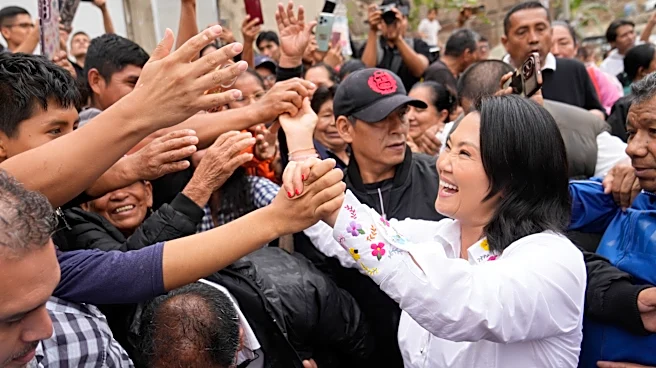
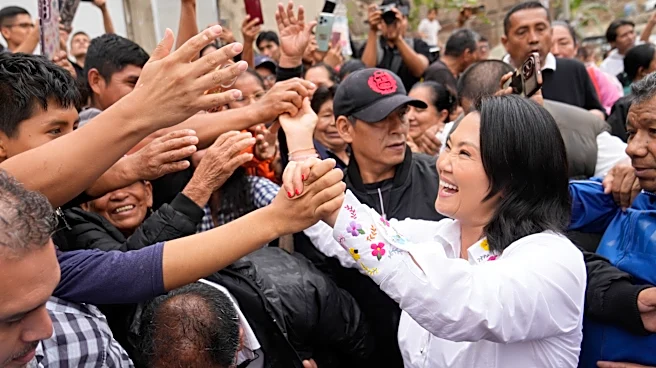
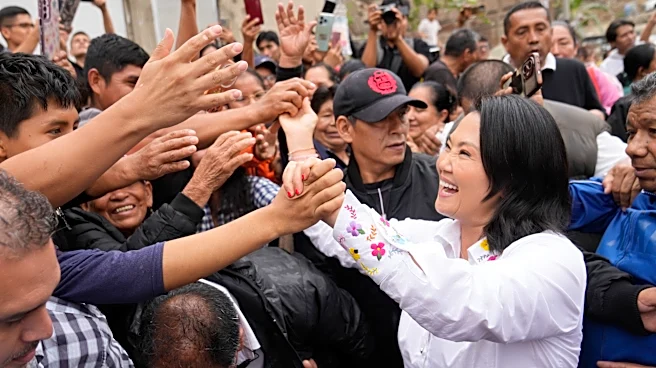
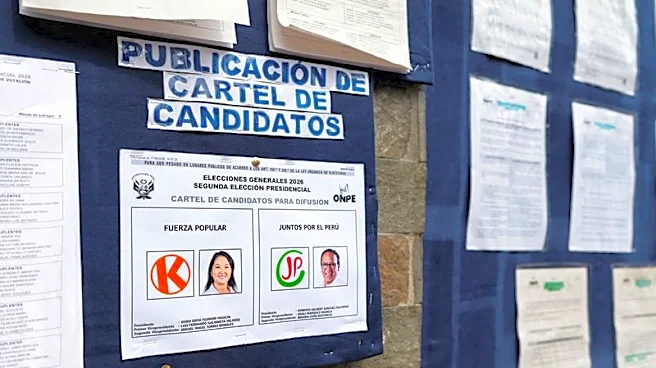
In Peru, the presidential runoff election has resulted in a narrow margin between candidates Roberto Sánchez and Keiko Fujimori, with Sánchez holding a slight lead of 50.055% over Fujimori's 49.945% as of the latest count. The election, which took place
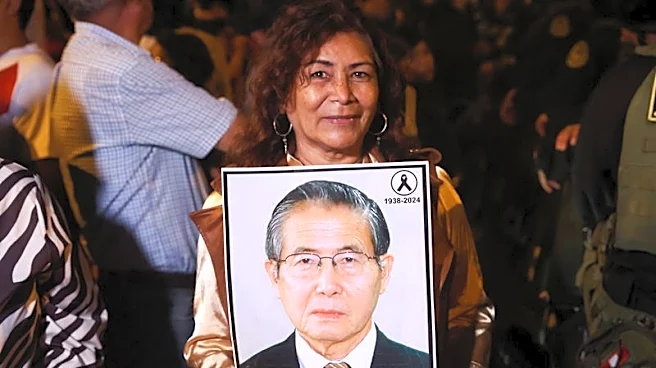
on Sunday, has seen over 17.8 million votes counted, with the final results expected within 30 days. The election is significant as it will determine the country's ninth president in a decade. Both candidates have controversial ties to former Peruvian presidents, with Sánchez being an ally of the imprisoned ex-president Pedro Castillo, and Fujimori being the daughter of former president Alberto Fujimori. The election has been marked by concerns over rising crime rates, particularly extortion linked to illegal gold mining.
Why It's Important?
The outcome of this election is crucial for Peru's political stability, as the country has experienced frequent changes in leadership over the past decade. The new president will face the challenge of addressing the country's crime issues and economic instability. The election also highlights the deep political divisions within Peru, as both candidates are associated with controversial figures from the country's past. The result could impact Peru's international relations and its approach to domestic policies, particularly in areas like crime and economic reform.
What's Next?
The electoral body has indicated that the final results will be available within 30 days, during which time the candidates and their supporters are urged to act with democratic responsibility. The winner will be sworn in on July 28 for a five-year term. The new president will need to address the pressing issues of crime and economic instability, and their approach will be closely watched by both domestic and international observers.